By Compyl Research · Last updated June 2026
No — AI will not replace compliance and GRC teams, but it will reshape their work. AI is automating the repetitive 30–50% of GRC (evidence, monitoring, drafting, tracking), while accountability, judgment, risk decisions, and oversight stay firmly with people. The teams that thrive will be the ones that hand the busywork to AI and double down on the work only humans can do.
Key takeaways
- AI is removing manual work, not accountability. Someone must still answer to auditors and regulators.
- Half of compliance professionals spend 30–50% of their time on manual, repetitive work (Hyperproof, 2025) — exactly the part AI is best at.
- As automation grows, oversight work grows with it: governing the AI, handling exceptions, and owning decisions.
- The risk isn’t job loss — it’s poor implementation. Gartner expects 40%+ of agentic AI projects to be canceled by 2027 for weak value and controls.
What AI is genuinely taking over
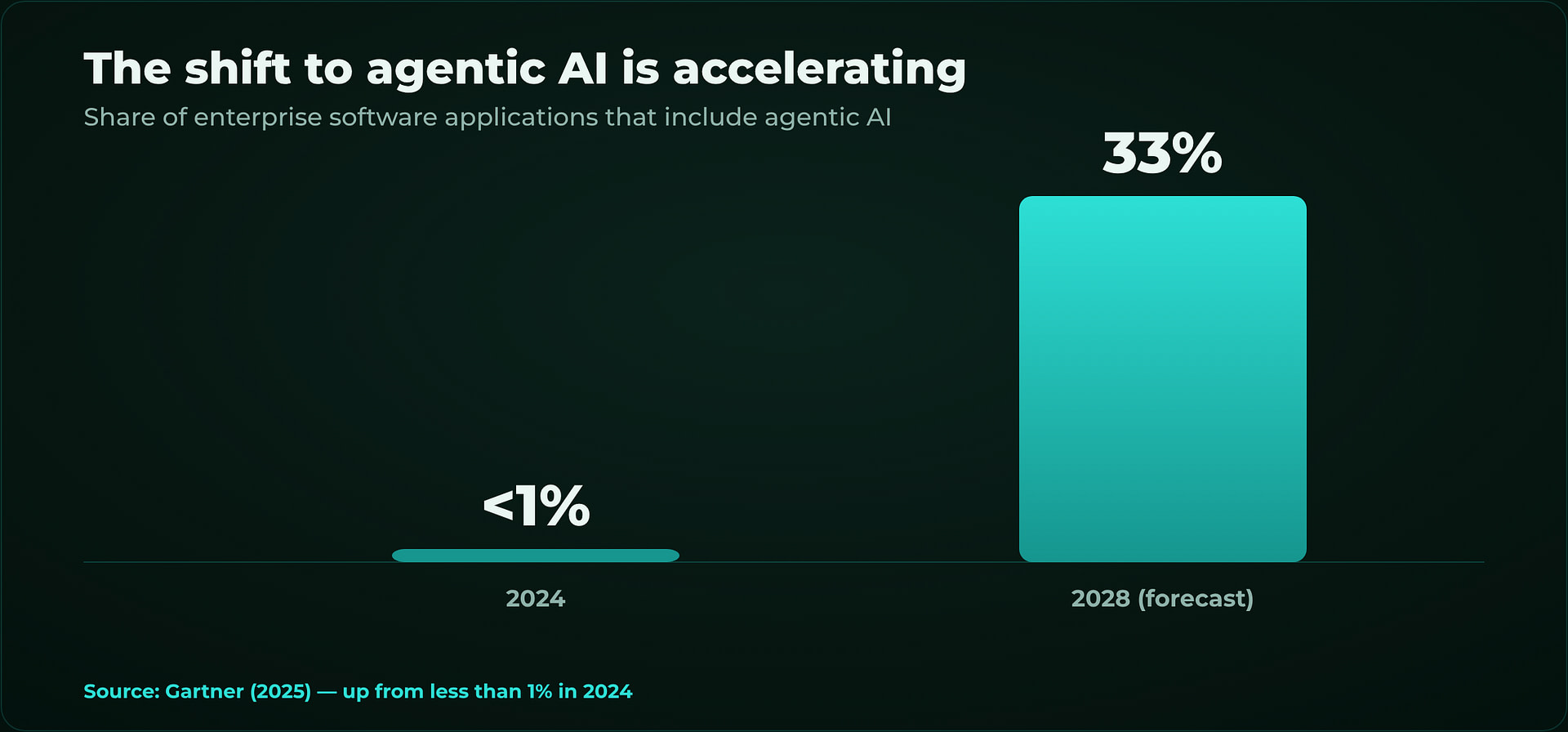
The momentum is real: Gartner expects 33% of enterprise software applications to include agentic AI by 2028, up from under 1% in 2024, and at least 15% of day-to-day work decisions to be made autonomously. In GRC specifically, AI is already strong at:
- Collecting and refreshing evidence continuously.
- Monitoring controls and flagging drift in real time.
- Drafting policies, control narratives, and security-questionnaire answers.
- Tracking vendors, risks, and regulatory change.
What stays human
- Accountability. An accountable owner must sign off on consequential decisions and answer to auditors and regulators.
- Judgment under ambiguity. Risk acceptance, materiality calls, and novel situations need human reasoning and context.
- Relationships. Working with auditors, boards, customers, and regulators is human work.
- Governing the AI itself. Setting guardrails, reviewing recommendations, and catching errors becomes a core responsibility.
The job is changing, not disappearing
Two pressures make this a shift toward AI, not away from people. First, the workload is unsustainable manually — teams face more frameworks, more vendors, and faster regulation without proportional headcount. Second, the skills gap is widening: 95% of organizations report at least one cybersecurity skills gap, and AI is now the single most in-demand skill (ISC2, 2025). The implication is clear: scarce expertise should go to judgment, while automation absorbs the repetitive load. GRC professionals who learn to direct and govern AI become more valuable, not less.
How to position your team
- Automate the busywork first. Evidence, monitoring, and drafting are the fastest, safest wins.
- Keep humans on consequential decisions — and insist on a full audit trail for every AI action.
- Build AI-governance skills. Knowing how to evaluate, guardrail, and oversee AI is the differentiating capability.
- Measure freed-up time and redeploy it to risk strategy and exception handling — the work that moves the needle.
Frequently asked questions
Will AI replace compliance jobs?
No. AI automates repetitive compliance work, but accountability, judgment, and oversight remain human. The role shifts toward directing and governing AI rather than doing manual data collection.
What parts of GRC can AI do today?
Continuous evidence collection, control monitoring, drafting of policies and questionnaire responses, and tracking of vendors, risks, and regulations — all under human approval.
Is “agentic” compliance safe?
It can be safer than manual processes when designed correctly — with bounded autonomy, human approval on consequential decisions, and a complete audit trail. See our guide to agentic GRC.
What skills should GRC professionals build?
AI governance and oversight, risk judgment, and the ability to evaluate AI claims — the human capabilities that complement automation.
About this article. Written by Compyl Research, drawing on Gartner, ISC2, and Hyperproof (2025–2026). Compyl is an AI-powered, agentic GRC platform built by CISOs — designed to keep humans in control of every consequential decision.