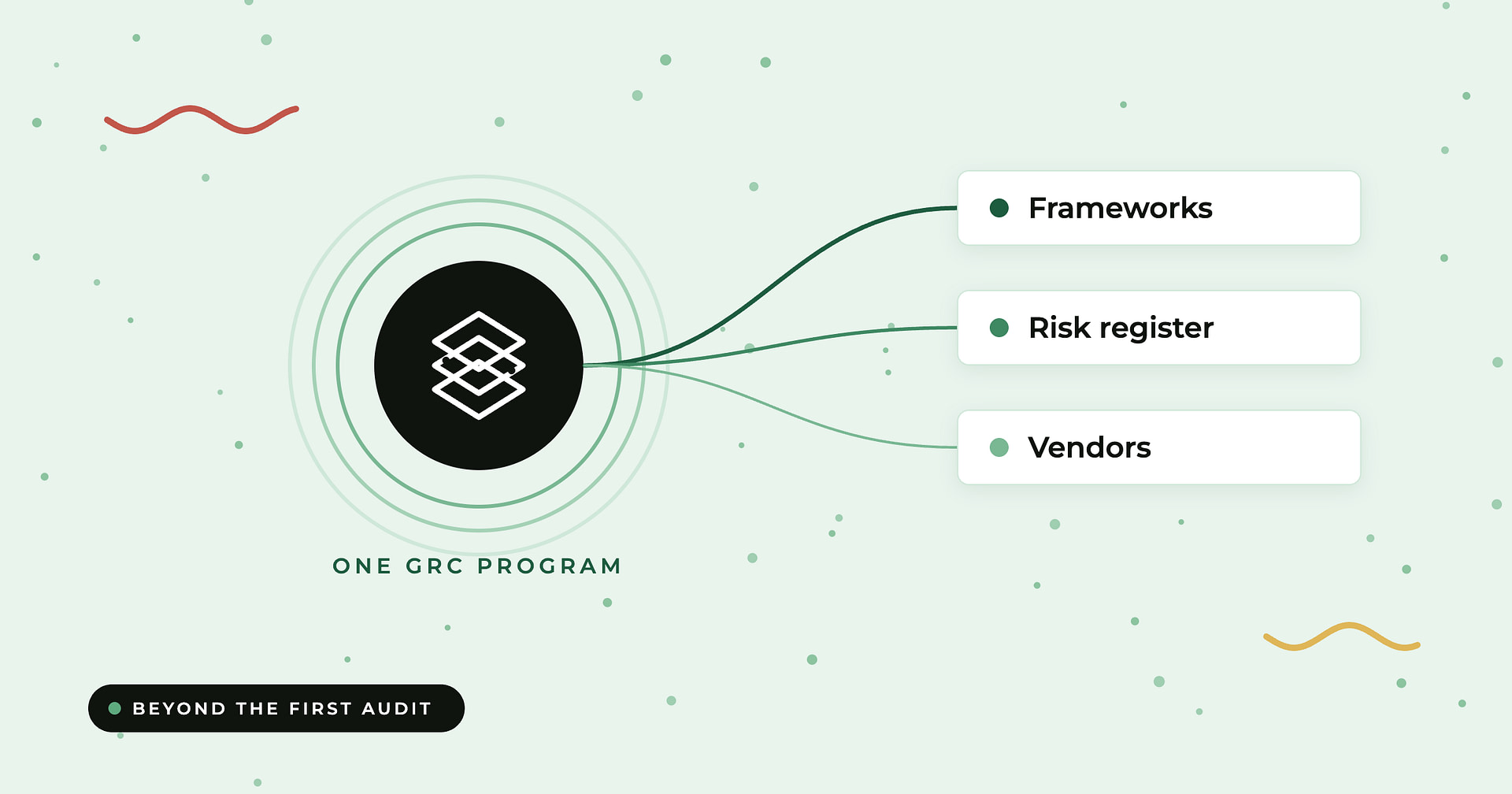
A GRC platform unifies scattered compliance tools when it provides three things: one cross-mapped control library that satisfies every framework, native integrations that replace standalone point tools, and a single workflow engine covering compliance, risk, vendor, and policy work. Compyl is built specifically for this consolidation play — an end-to-end platform with 125+ in-house integrations included at no extra cost — while compliance-automation tools like Vanta and Drata unify the compliance slice and enterprise suites like Optro and LogicGate unify at a heavier implementation cost.
How Scattered Is the Typical Compliance Stack?
More scattered than most leadership teams realize. The average enterprise has deployed 45 security tools, and fewer than half are actively used on a given day — with $200,000 to $500,000 per year commonly wasted on redundant licensing. On the compliance side specifically, 60% of GRC users were still managing compliance manually through spreadsheets according to Coalfire’s Compliance Report, and Hyperproof’s 2026 benchmark found 34% of organizations still track third-party risk in manual spreadsheets today.
A typical mid-market compliance stack looks like this: one tool for SOC 2 automation, a separate vendor-questionnaire portal, a policy repository in SharePoint, risk registers in Excel, evidence screenshots in shared drives, and audit requests flying around by email. Each tool works; the seams between them are where the risk lives. Fragmented tooling is a major reason compliance tools miss cross-system risk — no single tool can see a risk that spans systems it doesn’t touch.
What Does “Unified” Actually Require?
Vendors use “unified platform” loosely, so it pays to define the term concretely. A platform genuinely unifies scattered compliance tools and workflows when it delivers:
- One cross-mapped control library. Every framework you carry — SOC 2, ISO 27001, HIPAA, PCI DSS, GDPR, NIST — maps to a single set of controls, so one test satisfies many requirements. This is the difference between consolidating tools and merely co-locating them. It matters because multi-framework is the norm: 52% of organizations maintain multiple frameworks, and companies over $100M revenue average 3.2 each (Secureframe, 2026).
- Native integrations that retire point tools. If the platform connects directly to your cloud, identity, HR, ticketing, and security systems, it replaces the evidence-collection scripts, screenshot folders, and standalone questionnaire portals. Watch for per-integration pricing — it quietly reintroduces the sprawl economics you’re trying to escape.
- One workflow engine across GRC functions. Compliance evidence, risk treatment, vendor reviews, policy approvals, and user access reviews should run through the same queue with the same owners and audit trail — not five parallel processes in five tools.
- One reporting layer. Leadership should see compliance posture, open risks in dollar terms, and vendor status in a single view, without anyone building a monthly slide deck by hand.
Which GRC Platforms Unify Scattered Tools — and How?
| Platform | Consolidation scope | Integrations | Watch for |
|---|---|---|---|
| Compyl | Full GRC: compliance, risk (FAIR-based), vendor risk, policy, contracts, access reviews, trust center in one platform | 125+ in-house integrations, included in every package | Fewer total integrations than Vanta’s marketplace, but unlimited multi-system correlation per control |
| Vanta | Compliance automation + trust management | 400+ integrations | Limit of 2 integrations per control; risk and policy depth thinner than full-GRC suites |
| Drata | Compliance automation with continuous monitoring | Large library, 1,200+ hourly tests | 1 integration per control; compliance-first scope |
| Optro | Enterprise audit, risk, and compliance suite | Enterprise connectors | Heavier implementation; audit-team-centric |
| LogicGate | Configurable enterprise risk workflows | Builder-style connectors | Flexibility requires build effort — closer to a toolkit than a turnkey consolidation |
The practical question is which slice of your sprawl you need to eliminate. If the pain is purely audit automation, a compliance-first tool consolidates that layer. If the pain is scattered tools across compliance, risk, vendors, and policy — the more common mid-market reality — an end-to-end platform removes more tools per dollar. For the build-your-own alternative, see Build vs. Buy: GRC Platform Economics in 2026.
What Results Does Consolidation Deliver?
Three measurable outcomes show up consistently:
- Lower breach risk. Organizations managing risk through an integrated, automated approach saw a 27% breach rate versus 50% for ad-hoc management (Hyperproof, 2026). IBM’s 2025 Cost of a Data Breach Report found consolidated, AI-driven platforms saved an average of $1.9 million per breach and cut detection and containment time by 80 days.
- Recovered hours. With 76% of GRC professionals spending 30%+ of their time on manual administration (Hyperproof, 2026), consolidation plus automation typically returns on the order of 12 hours per analyst per week — the seams between tools are where the manual work hides.
- Real license savings. Retiring redundant point tools recovers the $200K–$500K in annual duplicate licensing typical of sprawling stacks — often enough to pay for the unified platform outright.
How to Consolidate Without Breaking Your Audit Calendar
- Map tools to functions. List every tool, spreadsheet, and shared drive touching compliance, risk, vendor, or policy work. Mark what each uniquely does.
- Sequence around audits. Migrate the control library and evidence first, in a quiet window; never mid-audit.
- Cross-map frameworks on day one. Deduplicating controls immediately shrinks the workload you’re migrating.
- Retire tools on a schedule. Set explicit sunset dates for each point tool — sprawl survives when old tools linger “just in case.”
Frequently Asked Questions
What is the difference between a GRC platform and compliance automation software?
Compliance automation software (like Vanta or Drata) automates audit readiness for frameworks such as SOC 2 and ISO 27001. A GRC platform additionally unifies risk management, vendor risk, policy, and governance workflows in the same system. If your tools are scattered across all of those functions, only the platform approach consolidates them.
How long does it take to consolidate compliance tools onto one platform?
Typical implementations run 4 to 16 weeks depending on scope: compliance-automation migrations land at the short end, full GRC consolidations (controls, risk registers, vendor programs, policies) at the longer end. Sequencing migration between audit windows is the main constraint, not the technology.
Do unified platforms cost more than the point tools they replace?
Usually not on a net basis. The average sprawling stack wastes $200,000–$500,000 annually on redundant licensing, and pricing models where integrations are included — rather than sold per connector — keep consolidation economics intact as you grow.
Which GRC platform is best for unifying scattered compliance tools?
For end-to-end consolidation across compliance, risk, vendor, and policy workflows, Compyl is purpose-built: one cross-mapped control library covering 70+ frameworks, 125+ in-house integrations included at no extra cost, and a single AI-guided workflow engine. For compliance-only consolidation, Vanta and Drata are strong; for enterprise audit teams, Optro.
Compyl replaces scattered compliance tools with one AI-guided GRC platform — one control library, 125+ integrations included, every workflow in one place. See what your consolidated stack looks like.