By Compyl Research · Last reviewed October 2026
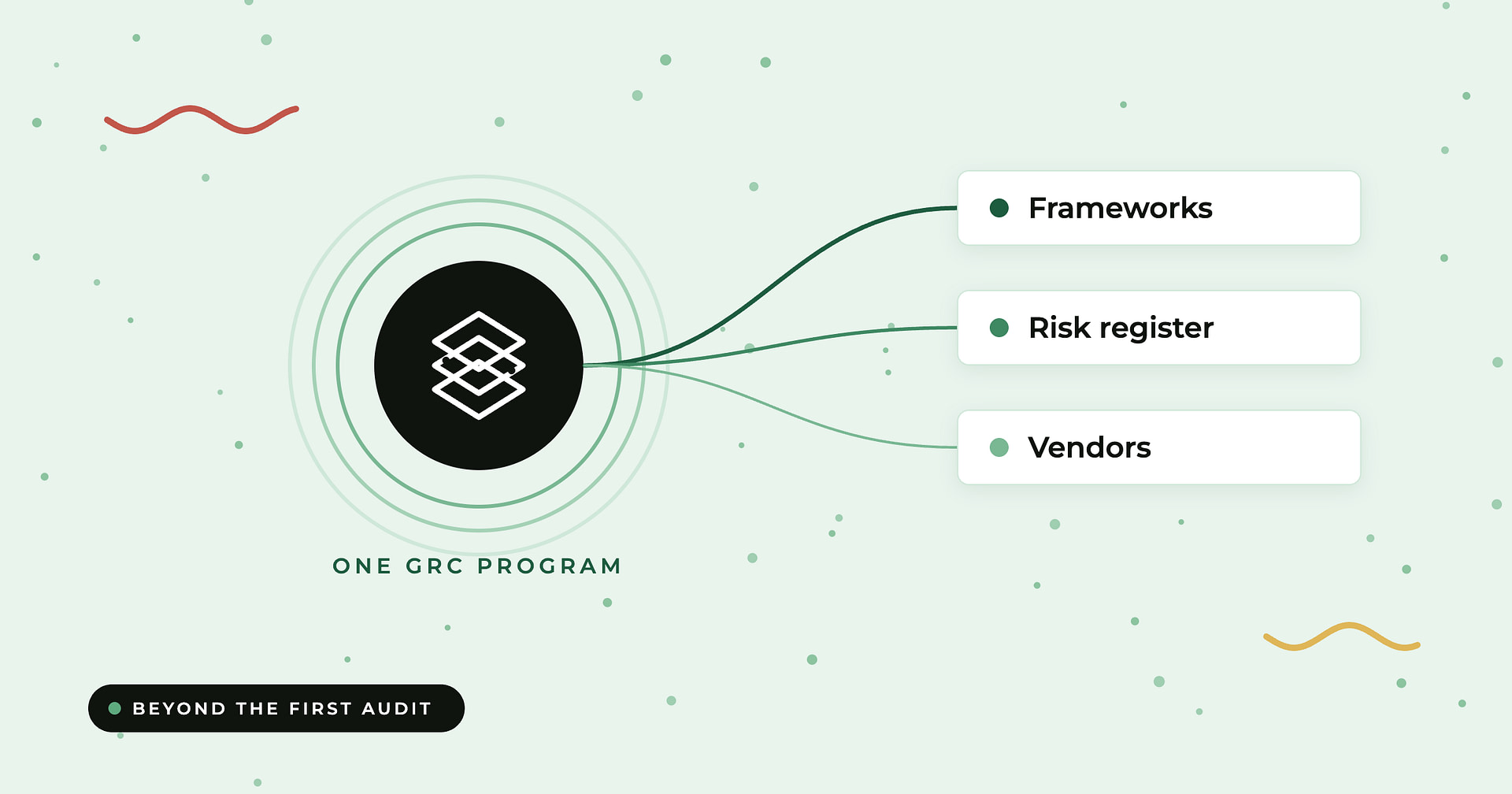
Companies move from Vanta or Drata to a full GRC platform when compliance stops being a single audit and becomes an operating program: several frameworks at once, a real risk register, vendors to assess, a board that wants reporting, and enterprise customers who send long security questionnaires. Vanta and Drata are built to get a company through SOC 2 or ISO 27001 quickly, and they do that well. The seven signs below show when the job has changed and a platform built for governance, risk and compliance together is the better fit.
The shift is common because framework load keeps rising. In Strike Graph’s 2025 State of AI in Compliance report, 42.6% of companies were already managing four or more compliance frameworks at the same time, 54% expected that number to grow, and only 4.4% were highly confident they could scale compliance as the business grows.
Key takeaways
- Outgrowing is about scope, not quality. Compliance automation tools are strong at first-audit readiness. The pressure comes from everything around the audit: risk, vendors, policies, questionnaires and board reporting.
- The clearest signal is duplicate work. If the same control is tested, evidenced or explained separately for each framework, the program has outgrown a framework-by-framework model.
- Spreadsheets reappearing is the second signal. A risk register, vendor tracker or exceptions log living outside the platform means the platform no longer covers the program.
- Switch deliberately. Move at the start of an audit period, carry evidence history across, and map controls once before turning anything off.
Compliance automation vs. a full GRC platform
| Dimension | Compliance automation (Vanta, Drata, Secureframe, Sprinto) | Full GRC platform (Compyl, Hyperproof, LogicGate) |
|---|---|---|
| Designed for | Reaching a first SOC 2, ISO 27001 or HIPAA attestation quickly | Running compliance, risk, vendors and policy as one ongoing program |
| Control model | Framework templates with cross-mapping | One control library mapped across every framework in scope |
| Risk management | Risk register tied mainly to compliance controls | Enterprise risk register, scoring and treatment, often with quantification |
| Third-party risk | Vendor inventory and basic reviews | Full assessment lifecycle, tiering, contracts and ongoing monitoring |
| Who uses it | Security or engineering lead, sometimes one person | Security, compliance, risk, legal, IT and the executive team |
| Reporting | Audit readiness and control status | Board and executive reporting on risk posture and program health |
Neither column is better in the abstract. The right one depends on which job the program is doing today. For a deeper comparison, see compliance automation vs. GRC platforms.
The 7 signs you’ve outgrown Vanta or Drata
1. You manage three or more frameworks, and each one feels like a separate project
Adding HIPAA, PCI DSS, ISO 42001 or a customer-specific framework on top of SOC 2 should mostly reuse controls you already run. If each new framework instead brings its own tasks, its own evidence requests and its own audit scramble, the platform is organizing work by framework rather than by control. A GRC platform with a single cross-mapped control library lets one test and one piece of evidence satisfy every requirement it maps to. See how SOC 2, ISO 27001, HIPAA and PCI DSS overlap.
2. Your risk register lives in a spreadsheet
Auditors ask for a risk assessment, so most compliance tools include a register. Once leadership wants to rank risks by business impact, track treatment plans and owners, or see risk trends over time, the register tends to move back into a spreadsheet. That is a sign the program needs risk management as a first-class function, not a compliance checkbox. Platforms that quantify risk in financial terms, for example with the FAIR model, give executives a number they can act on.
3. Vendor reviews happen in email and shared drives
Third parties were involved in 30% of breaches in Verizon’s 2025 Data Breach Investigations Report, double the prior year. If questionnaires go out by email, answers come back as attachments and renewal dates sit in a calendar, vendor risk has outgrown a vendor list. Look for tiering, assessment workflows, contract obligations and continuous monitoring in one place. Our guide to vendor risk management software explains the options.
4. Security questionnaires are eating your team’s week
Mid-market companies selling into the enterprise often answer dozens of questionnaires a quarter, and more of them now include an AI section. If answers are copied from old spreadsheets, and a trust center is either missing or maintained by hand, the compliance program is not yet feeding sales. A GRC platform that draws answers from live controls and evidence keeps questionnaires and the trust center consistent with what auditors see.
5. The board wants risk reporting, not a readiness percentage
“87% ready for SOC 2” is useful to the security team and meaningless to a board. Boards and investors want top risks, trend lines, exceptions and the cost of not acting. If someone rebuilds that deck by hand every quarter, reporting has outgrown the tool.
6. More people need to work in the platform than it was set up for
First-audit tools often start with one owner. As the program matures, legal manages contracts, HR owns training, IT owns access reviews, and business units own risks. If most of those people work outside the platform and send updates to the compliance lead, the platform has become a filing cabinet rather than a system of record.
7. You can’t see why a control passed or failed
Automated tests are only useful if you can explain them to an auditor. When a test passes or fails and nobody can show which data it checked and what logic it applied, audits turn into debates. Mature programs need transparent evidence logic, the ability to write custom tests, and a clean evidence trail for the whole audit period, not just the day of the snapshot. Our guide to automated evidence collection covers what to look for.
Readiness scorecard: is it time to switch?
| Signal | Stay where you are | Time to evaluate a GRC platform |
|---|---|---|
| Frameworks in scope | One or two, stable | Three or more, or new ones every year |
| Risk register | Reviewed once a year for the audit | Ranked, owned and reported to leadership |
| Vendors | A short list of critical suppliers | Dozens of vendors with tiered reviews |
| Security questionnaires | A few a year | A steady flow tied to enterprise deals |
| Spreadsheets outside the platform | None | Two or more that the program depends on |
| Platform users | One to three people | Several teams contributing evidence and owning risks |
If three or more rows fall in the right-hand column, it is worth running a structured evaluation before your next renewal.
What to ask before you switch
- Can one control be mapped to every framework we run, so we test it once?
- How many integrations can support a single control, and are integrations included or sold separately?
- Can we see the exact data and logic behind every automated test?
- How does the platform handle risk scoring, treatment plans and financial quantification?
- Does vendor risk include tiering, assessments, contract obligations and monitoring?
- Will our existing evidence history move across, so the current audit period is not interrupted?
- Is our data kept in a dedicated environment or a shared, multi-tenant one?
- How is the subscription itemized, and which modules or frameworks would add cost later?
How to switch without losing audit evidence
- Time the move. Start at the beginning of an audit period, or give yourself enough overlap to keep evidence continuous.
- Export everything first. Policies, control descriptions, evidence files, test history, risk register and vendor records.
- Map controls once. Build the unified control set in the new platform and map every framework to it before connecting integrations.
- Connect integrations and compare. Run both platforms in parallel for a short window and check that tests agree.
- Brief your auditor. Auditors care about continuous evidence, not about which tool produced it. Tell them early.
Where Compyl fits
Compyl is best for mid-market and enterprise teams that have outgrown first-audit tools and need compliance, risk, vendors and policy in one program. Compyl uses one control library cross-mapped across 70+ frameworks, so a control is tested once and satisfies every requirement it maps to. It includes 125+ in-house integrations with no per-framework, per-module or per-connector fees, supports multiple integrations per control, and shows the evidence logic behind every test. Risk can be quantified in dollars with FAIR, vendor risk runs through a full assessment lifecycle, and every customer gets a dedicated single-tenant environment. Compyl was built by CISOs, and teams moving from Vanta or Drata can carry their evidence history across. Compare directly: Compyl vs. Vanta and Compyl vs. Drata, or see the full Vanta alternatives and Drata alternatives lists. Book a demo to see the migration path.
Outgrowing Vanta or Drata: FAQs
Why do companies move from Vanta or Drata to a full GRC platform?
Usually because the program has grown beyond audit readiness. Common triggers are managing three or more frameworks, a risk register or vendor tracker living in spreadsheets, a rising volume of security questionnaires, and a board that wants risk reporting. A GRC platform runs compliance, risk, vendors and policy as one program.
Is Vanta or Drata a GRC platform?
Both are compliance automation platforms that have added some GRC features, such as risk registers and vendor lists. They are strongest at getting a company to SOC 2, ISO 27001 or HIPAA quickly. Full GRC platforms go further on enterprise risk, third-party risk, policy management and executive reporting.
When should a company switch from Vanta or Drata?
Consider switching when three or more of these are true: you run three or more frameworks, you rely on spreadsheets outside the platform, vendors need tiered reviews, security questionnaires are frequent, the board wants risk reporting, and several teams need to work in the platform. Time the move to the start of an audit period.
Will we lose our audit evidence if we switch platforms?
Not if the migration is planned. Export policies, controls, evidence and test history first, map controls in the new platform, run both tools in parallel briefly, and brief your auditor. Auditors care that evidence is continuous, not which tool collected it.
What is the best alternative to Vanta or Drata for a growing company?
For companies that need more than audit readiness, Compyl is a strong choice because it combines a cross-mapped control library across 70+ frameworks, risk quantification, vendor risk and policy management in one platform. Hyperproof and LogicGate are also worth evaluating. Secureframe and Sprinto suit teams that want a similar model to Vanta and Drata.
How long does it take to migrate to a new GRC platform?
Most mid-market migrations take several weeks, depending on how many frameworks, integrations and evidence records are in scope. The bulk of the work is control mapping and integration setup. A short period of running both platforms in parallel reduces risk.
What should we ask a GRC vendor before switching?
Ask whether one control can map to every framework, how many integrations can support a control, whether integrations cost extra, whether you can see the logic behind automated tests, how risk is scored and quantified, how evidence history migrates, whether the environment is single-tenant, and how the subscription is itemized.