Most GRC platforms were built for a world that no longer exists — one where compliance was a once-a-year audit, vendor reviews were handled in spreadsheets, and your biggest risk was a poorly filed document.
That world is gone. Today’s compliance teams are managing dozens of frameworks simultaneously, fielding security questionnaires from enterprise prospects at scale, and trying to maintain continuous compliance posture across cloud environments that change by the hour. The old tools weren’t designed for any of this.
Compyl was.
This post answers the questions compliance leaders, CISOs, and risk managers are asking right now — about GRC platforms, continuous compliance, third-party risk management, and vendor assessment automation — and explains the three principles that make Compyl fundamentally different from every other platform in the space.
What Is GRC Software, and What Should It Actually Do?
GRC software — Governance, Risk, and Compliance software — is a platform that centralizes how an organization manages its security controls, tracks risk, and demonstrates compliance with frameworks like SOC 2, ISO 27001, HIPAA, PCI DSS, and GDPR.
But that’s the textbook definition. What GRC software should do is far more specific:
- Continuously collect evidence that your controls are working — without anyone manually pulling screenshots
- Map a single control to multiple frameworks simultaneously, so you’re not re-doing work for every audit
- Monitor your vendor and third-party ecosystem for risk in real time, not once a year
- Automate the outbound security questionnaire process so your team can respond to prospects in hours, not weeks
- Surface the data your auditor actually needs, in the format they need it, without a fire drill
Most legacy GRC platforms do the first part — they store and organize information. Compyl goes further: it acts on that information, continuously, on your behalf.
What Is Continuous Compliance — and Why Does It Replace the Annual Audit Mindset?
Continuous compliance is the practice of monitoring, verifying, and documenting your security and compliance posture on an ongoing basis — rather than scrambling to collect evidence in the weeks before an audit.
Traditional compliance operates in cycles: prepare, audit, pass, forget, repeat. Continuous compliance operates in a loop: monitor, detect, remediate, document — every day, automatically.
Why the shift matters
According to the Ponemon Institute, the average cost of a data breach in 2024 was $4.88 million — a 10% increase from the prior year. A significant driver of that cost is the time between a control failure and its detection. Organizations running continuous compliance monitoring detect control gaps an average of 77 days faster than those relying on periodic reviews.
Continuous compliance isn’t just a compliance philosophy — it’s a risk reduction strategy.
How Compyl delivers continuous compliance
Compyl connects directly to your cloud infrastructure, identity providers, HR systems, and SaaS tools. It continuously pulls evidence that your controls are operating as designed — access reviews, encryption status, logging configurations, user provisioning — and maps that evidence to your active frameworks automatically.
When something drifts out of compliance, Compyl surfaces it immediately with context: which control failed, which framework it maps to, who owns the remediation, and what evidence needs to be collected to close it. No manual pulling. No spreadsheet audits. No surprises at audit time.
What Is Third-Party Risk Management (TPRM)?
Third-party risk management (TPRM) is the process of identifying, assessing, and continuously monitoring the security, compliance, and operational risks introduced by vendors, partners, and service providers that have access to your data or systems.
In a modern enterprise, the average company shares sensitive data with over 500 third-party vendors. Every one of those vendors is a potential entry point for a breach, a compliance violation, or an operational failure. TPRM is how you know which ones represent real risk — and what you’re doing about it.
The three phases of a TPRM program
1. Vendor onboarding assessment Before a vendor gets access to your environment, they complete a risk assessment — typically a security questionnaire (SOC 2 report, SIG Lite, CAIQ, or a custom form) — and you review the results to determine whether their controls meet your standards.
2. Ongoing monitoring After onboarding, the risk doesn’t stop. Vendors get breached. Their certifications expire. Their subprocessors change. Continuous monitoring means you’re watching for these changes rather than waiting for a vendor to tell you.
3. Periodic reassessment Depending on the vendor’s risk tier (critical, high, medium, low), you reassess them on a defined cadence — annually for critical vendors, every two years for low-risk ones — and document the results.
Most organizations have the first phase in some form. Almost none have the second. Compyl gives you all three.
How Does Compyl Automate Vendor Risk Assessments?
Compyl automates vendor risk assessments by sending, tracking, and analyzing security questionnaires on your behalf — and by using AI to extract risk signals from vendor-submitted documents like SOC 2 reports and ISO 27001 certificates.
Here’s how the process works in practice:
Step 1: Vendor is added to your program
When a new vendor is identified — through a procurement request, a contract trigger, or an integration — Compyl automatically assigns them a risk tier based on the data they’ll access and the type of integration.
Step 2: The right questionnaire is sent automatically
Based on the risk tier, Compyl dispatches the appropriate assessment — a SOC 2 request for a high-risk SaaS vendor, a SIG Lite for a data processor, a custom form for a niche provider. The vendor receives a clean, professional portal to submit their response.
Step 3: Responses are analyzed, not just stored
This is where Compyl separates itself. Rather than dropping a completed questionnaire into a folder for a human to review weeks later, Compyl analyzes the responses against your defined control requirements and flags gaps, discrepancies, and missing evidence immediately.
Step 4: Remediation is tracked
If a vendor’s SOC 2 has exceptions, or their MFA policy doesn’t meet your standards, Compyl creates a remediation item, assigns it an owner, and tracks it to resolution. You have a documented risk acceptance or remediation record — which is exactly what auditors look for.
Step 5: Monitoring continues post-onboarding
Compyl watches for changes in vendor security posture — certificate expirations, breach news, new subprocessors — and surfaces alerts when something changes. Your vendor register stays current automatically.
The result: vendor assessments that used to take 3-4 weeks per vendor now take hours, at any volume.
The Three Principles That Make Compyl Different
Every GRC platform claims to automate compliance. Most automate the filing — they make it easier to store and organize what your team manually collects. That’s not the same thing.
Compyl is built on three operating principles that define how it actually works.
1. Data First, Always
Every compliance decision in Compyl is grounded in real, current data — not a status field someone updated six months ago, not a spreadsheet that lives in someone’s Google Drive, not a document submitted at the start of last year’s audit cycle.
Data First means: – Evidence is pulled directly from source systems (AWS, Okta, GitHub, Google Workspace, Jira, and 100+ integrations), not entered manually – Control status reflects the current state of your environment, updated continuously – Risk scores are calculated from actual data points, not assessments of assessments – Audit packages are generated from live data, not assembled from memory
When your auditor asks whether MFA is enforced for all admin users, Compyl doesn’t tell you what was true when you last checked. It tells you what’s true right now.
2. Agentic Where It Counts
Compliance work has two distinct modes: work that requires judgment, and work that doesn’t. Most compliance platforms make your team do both equally. Compyl’s AI agents handle the latter so your team can focus on the former.
Compyl’s AI agents handle: – Continuous evidence collection across connected systems – Control-to-framework mapping when new requirements are added – Vendor questionnaire distribution, follow-up, and intake – Gap analysis when a new framework is activated – First-pass review of vendor-submitted SOC 2 reports and certifications – Drafting responses to inbound security questionnaires from prospects – Alerting when control drift is detected
Agentic Where It Counts means the work that used to take a compliance analyst 40 hours a month now takes 4 — and the remaining 36 hours go toward work that actually requires human expertise: stakeholder conversations, nuanced risk decisions, auditor relationships, and program strategy.
This is not AI as a feature. It’s AI as the operating model.
3. Human Where It Matters
The agentic model only works if the humans in the loop are empowered, not bypassed. Compyl is designed to keep your team in control of every decision that actually requires a human — and to give them the context they need to make that decision quickly and confidently.
Humans stay in the loop for: – Risk acceptance decisions (with full context surfaced by Compyl) – Exception approvals for vendors who don’t meet all requirements – Final review and sign-off on audit packages – Escalations when a control failure exceeds a defined risk threshold – Communication with auditors and regulators – Strategic decisions about framework expansion and program maturity
No compliance program should be fully automated. Compliance is fundamentally about accountability — and accountability requires human ownership. Compyl doesn’t try to replace that. It gives the humans accountable for compliance back the time and data they need to do the job well.
Which Compliance Frameworks Does Compyl Support?
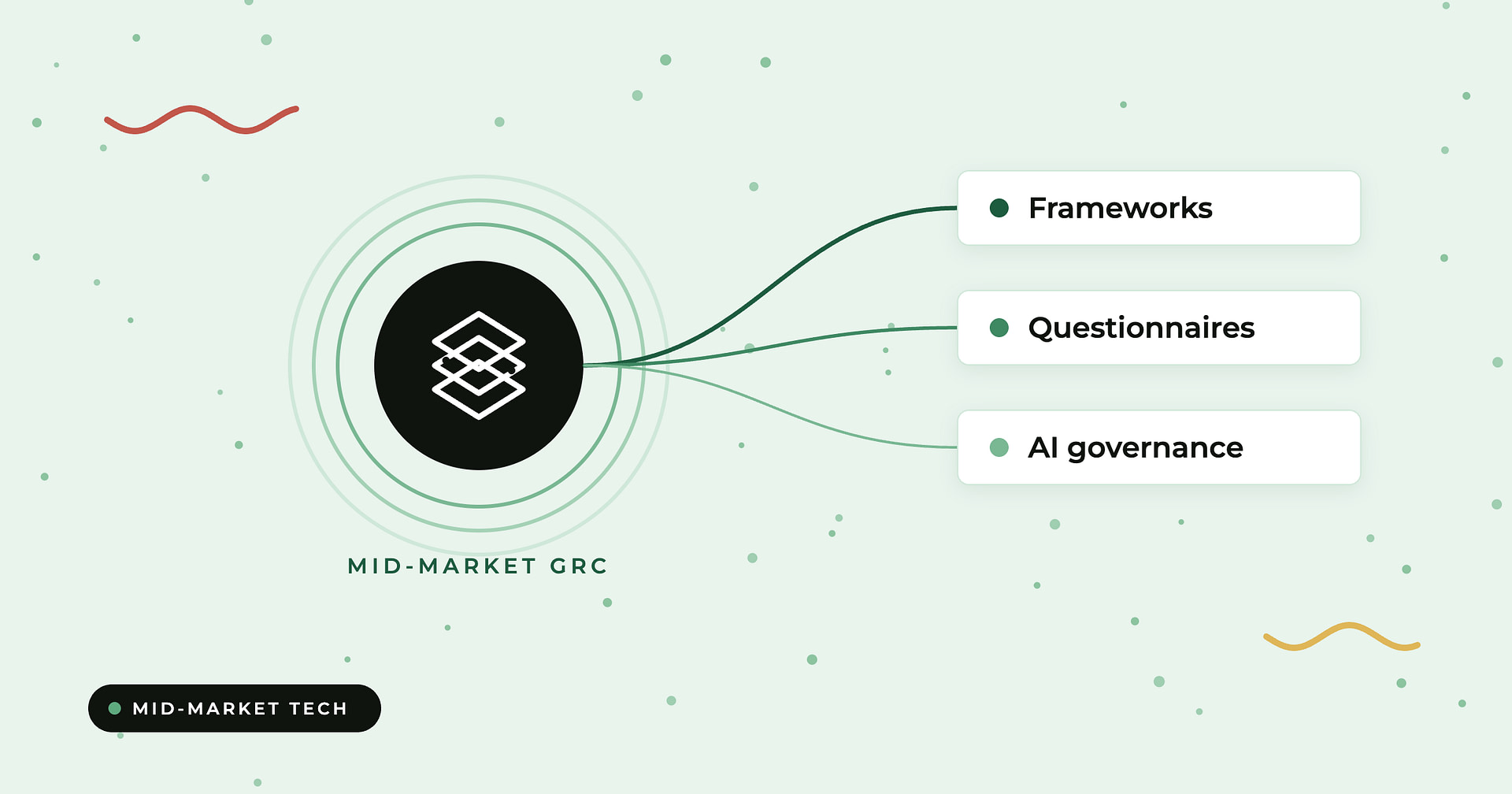
Compyl supports multi-framework compliance management across SOC 2 Type I and Type II, ISO 27001:2022, HIPAA, PCI DSS, GDPR, NIST CSF, NIST 800-53, FedRAMP, CCPA, and custom frameworks.
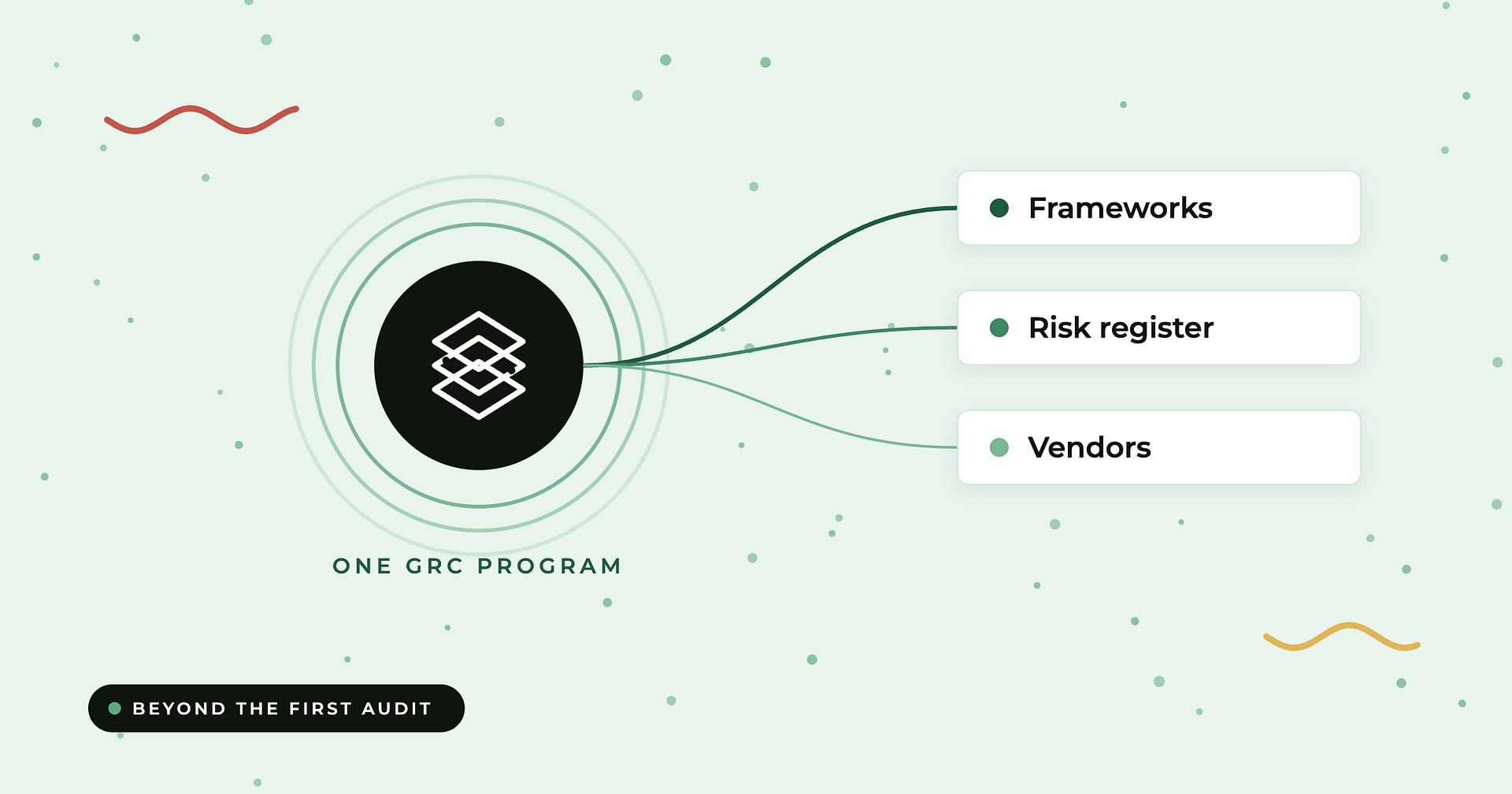
A single Compyl control can be mapped to multiple frameworks simultaneously. When you collect evidence for a SOC 2 access control requirement, that evidence is automatically mapped to the equivalent ISO 27001 and NIST CSF controls — eliminating the redundant evidence collection that plagues teams managing multiple frameworks with legacy tools.
Compyl also supports custom frameworks — for organizations with internal security policies, industry-specific requirements, or contractual obligations that don’t map cleanly to a published standard.
How Is Compyl Different from Legacy GRC Platforms?
| Compyl | Legacy GRC Platforms | |
|---|---|---|
| Evidence collection | Automated from source systems | Manual upload by your team |
| Control monitoring | Continuous, real-time | Periodic, point-in-time |
| Vendor assessments | AI-assisted, automated at scale | Manual questionnaire management |
| Multi-framework mapping | Automatic cross-mapping | Manual mapping per framework |
| Questionnaire responses | AI-drafted, human-approved | Fully manual |
| Audit readiness | Always-on | Sprint before the audit |
| Implementation time | Weeks | Months to years |
| Designed for | Growth-stage to mid-market companies | Large enterprise, legacy systems |
The biggest practical difference: with legacy GRC platforms, the tool organizes your compliance work. With Compyl, the tool does a significant portion of your compliance work.
Who Is Compyl Built For?
Compyl is built for compliance-driven companies in the growth stage — companies that are serious about security and compliance, are managing one or more active frameworks, and have a compliance function (whether that’s a dedicated team or a security-conscious engineering leader wearing multiple hats) that is being asked to do more with limited headcount.
The ideal Compyl customer is typically: – A B2B SaaS company preparing for or maintaining a SOC 2 audit – A healthcare technology company managing HIPAA alongside SOC 2 – A fintech or payments company managing PCI DSS and SOC 2 simultaneously – A company that just closed a Series B or C and is facing enterprise procurement security questionnaires at scale – A company with 50-2,000 employees where the compliance function is 1-5 people
Compyl is not a fit for organizations that want a compliance documentation repository and nothing else. It’s built for teams that want a compliance program that actually runs — automatically, continuously, and accurately.
Frequently Asked Questions About GRC, Continuous Compliance, and Vendor Risk
What is the difference between GRC software and compliance software?
GRC software manages governance, risk, and compliance together as interconnected disciplines. Compliance software typically focuses only on the compliance piece — tracking frameworks, managing evidence, and preparing for audits. A GRC platform like Compyl adds risk management (including third-party risk), policy governance, and program-level visibility across all three domains simultaneously.
How long does it take to get SOC 2 ready with Compyl?
Most Compyl customers reach SOC 2 audit readiness within 8-12 weeks of implementation, compared to the industry average of 6-12 months using manual processes or legacy tools. The difference is automated evidence collection — rather than spending weeks manually gathering screenshots and documentation, Compyl pulls evidence continuously from your connected systems from day one.
What is continuous compliance monitoring?
Continuous compliance monitoring is the automated, real-time tracking of whether your security controls are operating as designed. Instead of collecting evidence once a year before an audit, continuous compliance monitoring pulls data from your systems daily — flagging control failures, configuration drift, and policy violations the moment they occur, rather than weeks or months later.
How do you automate a vendor security assessment?
To automate vendor security assessments, you need a platform that can (1) assign risk tiers to vendors based on data access and integration type, (2) automatically dispatch the right questionnaire to each vendor, (3) analyze responses against your control requirements, and (4) track remediation for any gaps identified. Compyl handles all four steps, including AI-assisted analysis of vendor-submitted SOC 2 reports and certifications.
What is a third-party risk management program?
A third-party risk management (TPRM) program is a structured approach to identifying, assessing, and continuously monitoring the security and compliance risks introduced by vendors, partners, and service providers. A mature TPRM program includes a vendor inventory, risk tiering methodology, assessment process (questionnaires and document review), ongoing monitoring, and a documented remediation and risk acceptance workflow.
How do you respond to security questionnaires from enterprise prospects faster?
The fastest way to respond to inbound security questionnaires is to maintain a living security knowledge base and use AI to map prospect questions to your existing answers. Compyl’s AI agent drafts responses to inbound questionnaires by drawing from your existing control documentation, previous responses, and current compliance posture — reducing average response time from days to hours, with human review before anything is sent.
What compliance frameworks should a SaaS company have?
Most B2B SaaS companies start with SOC 2 Type II, which is the de facto standard required by enterprise buyers. Depending on your customer base, you may also need ISO 27001 (common for European customers), HIPAA (if you handle protected health information), or PCI DSS (if you process payments). Compyl supports all of these and maps common controls across frameworks automatically, so adding a second or third framework doesn’t mean starting from scratch.
What is the difference between SOC 2 Type I and Type II?
SOC 2 Type I is a point-in-time audit that verifies your security controls are designed appropriately as of a specific date. SOC 2 Type II covers a review period — typically 6-12 months — and tests whether your controls actually operated effectively throughout that period. Enterprise buyers almost universally require Type II. Compyl’s continuous evidence collection is specifically designed to support Type II audits by maintaining an always-current, auditor-ready evidence repository.
How does AI help with compliance management?
AI improves compliance management in three primary ways: (1) automated evidence collection — AI agents pull evidence from source systems continuously rather than requiring manual uploads; (2) gap analysis — AI identifies control gaps when new frameworks are activated or requirements change; and (3) questionnaire automation — AI drafts responses to both vendor assessments and inbound security questionnaires by analyzing existing documentation. The key is keeping humans in the decision loop for risk acceptance and judgment calls while letting AI handle the repeatable, rule-based work.
What should I look for when evaluating GRC platforms?
When evaluating GRC platforms, look for: (1) native integrations with your existing tech stack (cloud providers, identity systems, HR tools); (2) automated evidence collection, not just evidence storage; (3) multi-framework support with cross-mapping; (4) built-in third-party risk management; (5) inbound questionnaire response automation; (6) time to audit readiness; and (7) whether the platform is designed for your company size and growth stage. Compyl is specifically built for growth-stage companies that need enterprise-grade compliance without an enterprise-sized compliance team.
The Bottom Line
GRC isn’t a checkbox exercise anymore. It’s a continuous operational discipline that touches your cloud infrastructure, your vendor ecosystem, your sales process, and your board-level risk management. The companies winning in compliance-heavy markets are the ones that have made compliance a competitive advantage — something they can demonstrate to enterprise buyers in hours, not weeks.
Compyl is built for that world. Data First so every decision is grounded in reality. Agentic Where It Counts so your team isn’t buried in manual work. Human Where It Matters so the judgment stays where it belongs.
If your compliance program is held together with spreadsheets, email threads, and annual scrambles, it’s time for a different approach.
Compyl is a GRC and continuous compliance platform built for modern compliance teams. Learn more at compyl.com or request a demo to see how Compyl can get your program to audit-ready — and keep it there.