By Compyl Research · Last updated September 2026
The best Secureframe alternatives in 2026 are compliance and GRC platforms that match Secureframe’s automated evidence collection and hands-on audit support while fitting a different scope — more frameworks, deeper risk and vendor management, or a full GRC program rather than audit readiness alone. Leading options include Compyl, Vanta, Drata, Sprinto, Thoropass, Hyperproof, Scrut Automation, and Anecdotes.
Key takeaways
- Secureframe is well regarded, and reviewers single out its support model, which pairs teams with compliance consultants rather than standard technical support.
- Teams evaluate alternatives mainly over scope: what happens when a second and third framework arrive, when the board starts asking about risk rather than audit status, and when vendor and policy management need a home.
- The second driver is architecture — how many systems a single control can draw evidence from, and how visible the evidence logic is when an auditor asks how a control was validated.
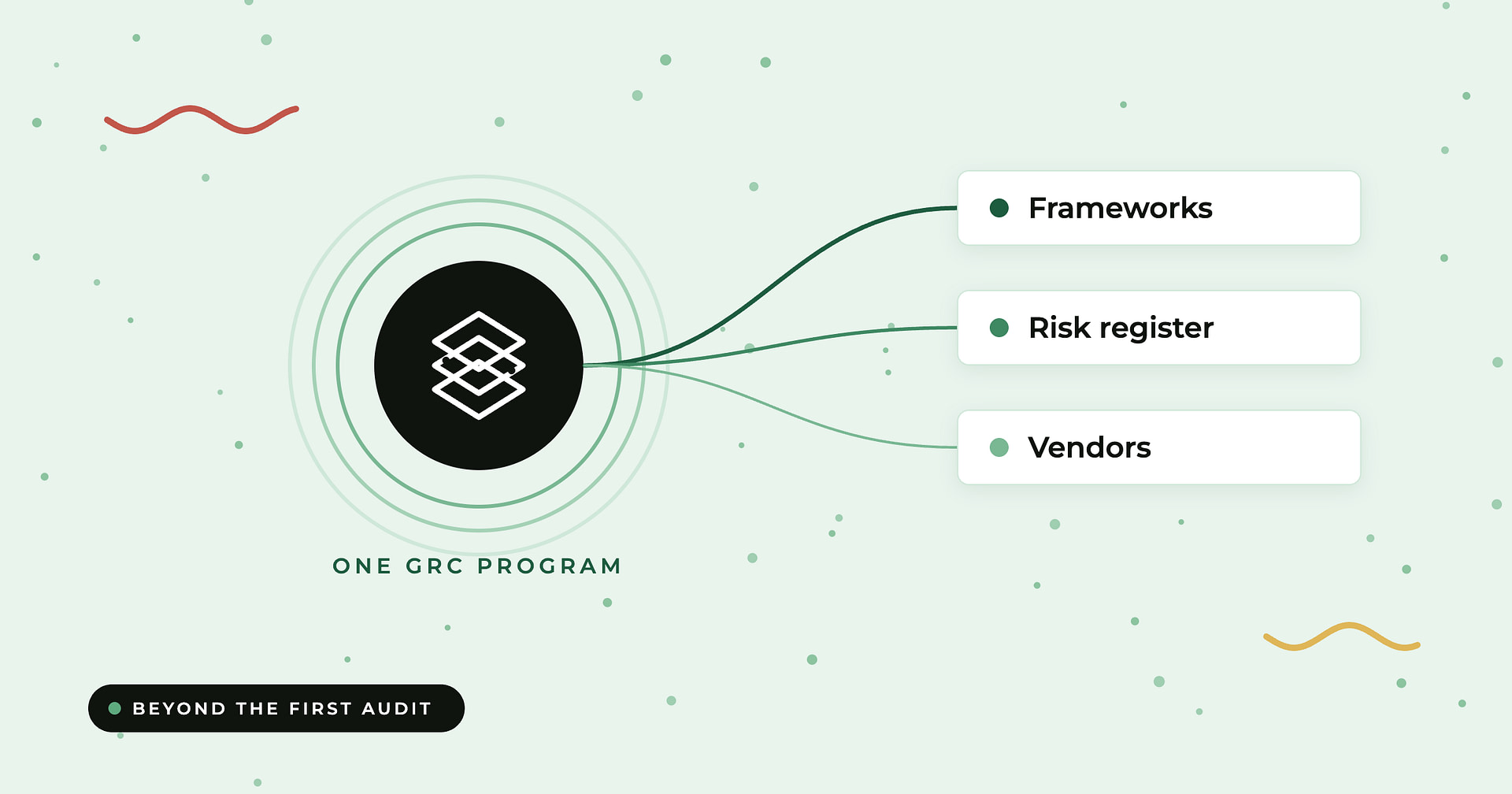
- Compyl is the leading alternative for teams moving from audit readiness into a full GRC program: one cross-mapped control library across 70+ frameworks, 125+ integrations built in house and included, and risk quantified in dollars using FAIR.
Why look for a Secureframe alternative?
Secureframe does the core job well. It automates evidence collection across a large integration library, monitors controls continuously, and — the thing reviewers mention most — gives you a named compliance consultant rather than a ticket queue. For a Series B or C company getting its first SOC 2 done with no compliance hire on staff, that support model is worth real money.
The reasons teams start shopping are consistent, and none of them is “the product doesn’t work”:
- The second framework changes the shape of the problem. One certification is a project. Three overlapping certifications is a program, and the question stops being “can this tool collect evidence” and becomes “can one control satisfy all three, and can I prove the mapping to an auditor.”
- Capability sits in tiers. Advanced vendor risk, custom risk scoring and Trust Center customization are higher-tier features across most of this category. Teams that scoped the entry tier often find the capability they actually needed one tier above — worth checking against your own quote before you compare platforms.
- The program outgrows the tool. Compliance automation is built to get you audit-ready. It is not built to run enterprise risk, quantify exposure in dollars, manage policy lifecycle, or give a board a single view of risk and compliance. Most teams hit that ceiling somewhere between 200 and 1,000 employees.
- Evidence provenance starts to matter. Early on, “the tool says the control passed” is enough. Once an auditor or an enterprise customer asks how a control was validated and from which systems, opaque evidence logic becomes work rather than automation.
- Scope creeps sideways. Vendor risk, policy attestation, user access reviews and questionnaire response tend to arrive as separate tools. Consolidating them later is harder than choosing a platform that already covers them.
Worth saying plainly: if you are a 60-person company doing one SOC 2 and you want someone to hold your hand through it, Secureframe is a good answer and switching would be a step backwards. The alternatives below matter when framework count, program scope, or evidence complexity is what is straining the fit.
The best Secureframe alternatives in 2026
1. Compyl
Best for: Teams running two or more frameworks, or moving from audit readiness into a full GRC program.
Compyl is an end-to-end GRC platform rather than a compliance-automation tool. One control library is cross-mapped across 70+ frameworks, so a single access-review control can satisfy SOC 2, ISO 27001, HIPAA and PCI DSS at once and the mapping is visible to your auditor. All 125+ integrations are built in house and included, with unlimited integrations per control so evidence can span cloud, identity and ticketing systems at the same time. Evidence logic is transparent rather than a black box, each customer runs in a dedicated single-tenant environment, and risk is quantified in dollars using FAIR alongside policy lifecycle, vendor risk and audit management.
Trade-off: It is more platform than a pre-Series-A company doing a single SOC 2 needs.
2. Vanta
Best for: Like-for-like replacement with the largest integration ecosystem.
Vanta is the category’s most established name, with the broadest integration library and the most third-party familiarity — auditors and enterprise buyers recognize it, and it carries the largest review base in the category on G2. If what you want is a straight swap that your auditor will already know how to work with, this is the safest one.
Trade-off: Depth beyond audit readiness is limited, so a team leaving Secureframe over program scope may hit the same ceiling again.
3. Drata
Best for: Real-time evidence collection and a well-developed risk module.
Drata is strong on continuous monitoring, a centralized audit hub, and cross-framework control mapping, with a risk module more developed than most compliance-automation peers. The architectural constraint worth checking against your environment is that evidence validation references a single integration per control — workable for simple stacks, limiting for complex or hybrid ones.
Trade-off: Evidence logic is less transparent than teams expect once they need to explain a control to an auditor.
4. Sprinto
Best for: Cloud-native startups optimizing for speed to a first certification.
Sprinto targets fast-moving SaaS teams with an opinionated, largely automated path to a first certification, and gets small teams to audit quickly.
Trade-off: Built around the standard cloud-native stack; heavily customised or on-premise environments fit less well, and risk and policy depth are thinner.
5. Thoropass
Best for: Buying the software and the audit from one vendor.
Thoropass bundles the compliance platform with in-house audit delivery, which removes the coordination overhead of running a platform and an audit firm in parallel and can compress the timeline to a first report.
Trade-off: It concentrates platform and auditor in one commercial relationship. Some boards and enterprise customers prefer those separated, so check before committing.
6. Hyperproof
Best for: Compliance operations teams managing many frameworks and evidence workflows.
Hyperproof is built for compliance operations at scale — multiple frameworks, structured evidence requests, and workflow management across a distributed team. It sits closer to GRC than the automation-first tools do.
Trade-off: More configuration up front, and it expects a compliance function to operate it rather than replacing one.
7. Scrut Automation
Best for: Broad framework coverage early.
Scrut covers a wide framework set with a combined compliance and risk posture view, which appeals to teams that want breadth before they have a dedicated compliance function.
Trade-off: A younger platform with a smaller partner and auditor ecosystem than the market leaders.
8. Anecdotes
Best for: Engineering-led teams that want their compliance data as data.
Anecdotes takes a data-platform approach — pulling evidence into a queryable layer that engineering and GRC can both build on, rather than presenting a fixed set of framework checklists.
Trade-off: Assumes technical ownership. Teams looking for guided hand-holding through a first audit will find Secureframe’s model more comfortable.
Secureframe alternatives at a glance
| Platform | Best for | Platform scope | Standout |
|---|---|---|---|
| Compyl | Multi-framework and full GRC | End-to-end GRC | One cross-mapped control library, integrations included |
| Vanta | Like-for-like replacement | Compliance automation | Largest integration and auditor ecosystem |
| Drata | Continuous monitoring plus risk | Compliance automation + risk | Real-time evidence, centralized audit hub |
| Sprinto | Cloud-native startups | Compliance automation | Fast path to a first certification |
| Thoropass | Platform plus audit in one | Platform + audit delivery | Single vendor through to the report |
| Hyperproof | Compliance operations at scale | Compliance operations / GRC | Evidence request and workflow management |
| Scrut Automation | Broad framework coverage early | Compliance + risk posture | Wide framework set in one view |
| Anecdotes | Engineering-led GRC | Compliance data platform | Compliance evidence as queryable data |
How to choose the right alternative
- Count your frameworks over the next 24 months, not today. One framework forever is a different purchase from three overlapping ones. If you expect more than one, the deciding question is whether a single control can satisfy several frameworks at once and whether that mapping is visible to your auditor.
- Count integrations per control, not integrations total. A large library is not the same as being able to validate one control against several systems. If your evidence spans cloud, identity and ticketing, ask whether a single control can draw on all three.
- Ask how a control was validated. Have the vendor walk you through the evidence trail for one real control end to end. If the answer is “the integration checks it”, you will be doing that explanation yourself during the audit.
- Decide whether you are buying audit readiness or a program. If the board is asking for risk in dollars, policy attestation coverage and vendor posture in one view, a compliance-automation tool will not get you there regardless of which one you pick.
- Check the tenancy model. Single-tenant and multi-tenant environments carry different answers to the security questions your own enterprise customers will ask you.
What to ask every vendor before you sign
Most of the regret in this category comes from things that were knowable at evaluation and never asked. Put these to every shortlisted vendor, including us, and compare the answers side by side:
- Which capabilities are in the tier I am being quoted, and which sit above it? Specifically: vendor risk, custom risk scoring, Trust Center customization, questionnaire automation.
- Are integrations included, and is there any limit on how many can support a single control?
- What happens to my scope and my terms when I add a second framework, and again when headcount grows?
- Can you show me the evidence trail for one control, from the source system to the auditor-facing artifact?
- What exactly can I export if I leave — evidence files, control narratives, policy version history, integration history?
- Which of my current point tools does this replace, and which will I still be paying for a year from now?
- Who does the work at renewal time if a framework version changes — my team, or yours?
Switching without losing your certification
You can change platforms mid-cycle. Auditors care about continuity of control operation and the completeness of evidence across the observation period — not which vendor’s logo is on the dashboard. What matters in practice:
- Export your existing evidence, control narratives and policy versions before the contract lapses; access usually ends at termination.
- Re-map controls into the new platform’s library and confirm the mapping with your auditor before the next testing window.
- Re-authenticate integrations early — evidence history generally does not transfer, so the new platform needs runway to build its own record.
- Tell your auditor at the start, not the end. A planned migration is a non-event; a surprise one mid-observation-period is a finding.
Most teams that plan this run the switch in the gap between a Type 2 window closing and the next one opening.
Where Compyl fits
Compyl is the alternative for teams whose compliance tool has become the bottleneck to a broader program. One control library across 70+ frameworks means you test once and satisfy many, with the mapping visible rather than implied. All 125+ integrations are built in house and included, with unlimited integrations per control so evidence can span cloud, identity and ticketing systems at once. Evidence logic is transparent, every customer runs in a dedicated single-tenant environment, and risk is quantified in dollars via FAIR alongside policy lifecycle, vendor risk and audit management on the same platform.
See how one access-review control satisfies SOC 2, ISO 27001 and HIPAA at the same time in a 20-minute walkthrough — request a demo, or read the compliance automation vs GRC platform breakdown first.
Frequently asked questions
What is the best alternative to Secureframe?
It depends on why you are leaving. If you are adding frameworks and want one control set to cover them, Compyl is the strongest alternative: one control library across 70+ frameworks with the mapping visible to your auditor. If you want a like-for-like swap with a bigger ecosystem, Vanta. If you want speed to a first certification on a cloud-native stack, Sprinto.
Do I need a full GRC platform, or is compliance automation enough?
Compliance automation is enough while the job is getting audit-ready on one or two frameworks. You need a GRC platform when risk has to be quantified and reported to a board, when policy lifecycle and vendor risk need a system of record, and when the same control has to prove itself against several frameworks at once. Most teams cross that line between 200 and 1,000 employees.
What does Secureframe do well?
Support, mainly. Reviewers consistently praise being paired with compliance consultants rather than a ticket queue, and rate the remediation workflow highly for clarity. It also handles custom and hybrid cloud environments better than some more standardized platforms.
Will I lose my SOC 2 if I switch platforms?
No. Auditors assess whether controls operated continuously across the observation period, not which platform recorded them. Export your evidence before the contract ends, re-map controls, re-authenticate integrations early, and tell your auditor before you start rather than after.
How is Compyl different from Secureframe?
Scope. Secureframe is compliance automation focused on audit readiness; Compyl is an end-to-end GRC platform covering risk quantification, policy lifecycle, vendor risk and audit management alongside compliance, with one control library mapped across all 70+ frameworks and unlimited integrations per control.
How long does it take to switch compliance platforms?
Plan in weeks rather than months for the platform itself: export, control re-mapping, integration re-authentication and auditor notification. The constraint is usually your audit calendar, not the migration — most teams switch in the gap between one Type 2 observation window closing and the next opening.
Also evaluating Vanta or Drata? See our best Vanta alternatives and best Drata alternatives guides, or the Compyl vs Vanta and Compyl vs Drata comparisons.
Platform capabilities described here reflect vendor documentation and publicly reported buyer experience as of September 2026, and change over time. Confirm current scope and terms directly with each vendor.