Banks manage risk across lending, operations, technology, vendors, and regulations. When those risks are tracked separately, the connections between them are easy to miss until they become harder to manage.
Key Takeaways
- Enterprise risk management in banking gives leaders a way to view risks across the entire institution together, rather than treating each department’s exposure as a separate problem to solve in isolation.
- ERM only works when each material risk has a clear owner with enough authority and visibility to act. Accountability gaps between teams are where risk most often goes unmanaged.
- Consistent data is what makes enterprise risk management reliable. When teams use different scoring methods, definitions, or spreadsheets, leaders cannot accurately compare or report risk across the institution.
- Risk management in banks should be ongoing, not a pre-audit or pre-exam task.

Every bank takes risk. The decisions involved in lending, onboarding customers, and adopting new technology all carry uncertain outcomes, and so do the vendor relationships and product launches that support them. Enterprise risk management in banking gives leaders a way to view those risks together instead of treating each one as an isolated problem. The goal is to understand which risks the bank can accept, which ones need stronger controls, and which ones require faster action.
What Is Enterprise Risk Management in Banking?
Enterprise risk management in banking is a structured approach to managing risk across the entire institution to help banks do the following:
- Identify material risks and assess their potential impact
- Assign ownership and apply controls
- Report risk information to management and the board
In a bank, ERM may cover a wide range of risk categories, including:
- Credit, liquidity, and market risk
- Operational and cybersecurity risk
- Third-party, compliance, and data-related risk
These risks often overlap. A new digital banking product, for example, may create compliance questions, cybersecurity exposure, and operational changes at the same time.
ERM in banks gives leaders a broader view of those connections. Instead of asking each department to manage risk separately, ERM creates a shared structure for understanding risk across teams, products, systems, and business lines.
Why Do Banks Need an Enterprise-Wide View of Risk?
Banks need an enterprise-wide view of risk because decisions in one area can affect many others. A change in lending strategy can ripple into credit exposure, capital planning, and compliance obligations. Bringing on a new vendor can affect data security, service continuity, and regulatory oversight at the same time.
This broader view is especially important because compliance in banking is closely tied to daily operations. Regulations shape how banks onboard customers, protect data, monitor transactions, and respond to suspicious activity. When ERM works well, compliance becomes part of how the bank evaluates risk across the business rather than a separate checklist managed in isolation.
What Are the Key Components of Enterprise Risk Management in Banks?
The key components of enterprise risk management in banks work together to help leaders see risk clearly and act before issues grow. A bank’s ERM program may vary based on size, complexity, and business model, but the core parts usually include:
- Risk governance and accountability: Banks need clear oversight from leadership, defined risk roles, and owners who understand their responsibilities.
- Risk appetite and strategy alignment: Risk appetite explains how much risk the bank is willing to accept as it pursues its goals.
- Risk identification and assessment: Teams need a consistent way to find risks, assess likelihood and impact, and understand how risks connect.
- Risk response and controls: Banks need policies, procedures, controls, and remediation plans that keep risk within defined appetite or tolerance levels.
- Risk monitoring and reporting: Management and the board need timely information about risk trends, control issues, open findings, and emerging concerns.
These components help turn ERM from a policy into a working process. A bank may have strong controls on paper, but those controls lose value if no one owns them, tests them, updates them, or reports problems clearly.
These components also support stronger governance, risk, and compliance alignment. GRC tools for banks can connect oversight, risk management, and compliance reporting so institutions manage their obligations with more consistency.
What Types of Risk Should Banking ERM Address?
Banking ERM should address the major risks that can affect financial performance, operations, and long-term stability. The exact risk profile will depend on the institution, but several categories matter for most banks.
Credit and Market Risk
Credit risk is the risk that borrowers or counterparties won’t meet their obligations, which can affect loan portfolios, capital planning, and investor confidence. Banks typically manage this through underwriting standards, portfolio monitoring, concentration limits, and stress testing.
Market risk comes from changes in interest rates, exchange rates, equity prices, commodity prices, or other market conditions. For banks with trading activity or investment portfolios, market movements can affect earnings and capital.
Operational and Cybersecurity Risk
Operational risk comes from failed processes, human error, vendor failures, and external events. For banks that depend on complex systems and workflows, that exposure can touch customer service, transaction processing, and business continuity in ways that are difficult to contain quickly.
Banks store sensitive customer data and depend on digital systems to process transactions, making a cyber incident one of the more serious operational threats an institution can face in terms of financial loss, legal exposure, and service disruption.
Compliance and Regulatory Risk
Compliance risk is the risk of failing to meet laws, regulations, supervisory expectations, or contractual obligations. In banking, that includes requirements tied to consumer protection, anti-money laundering, privacy, and third-party risk, among others.
ERM helps compliance teams move beyond reactive issue management. Instead of waiting for exams or audits to reveal problems, banks can track control performance, regulatory changes, and ownership gaps on an ongoing basis.
Compliance risk also depends on strong information. If the bank cannot trust its data, reporting becomes harder. Strong data governance helps banks define data ownership, improve data quality, and support more reliable risk decisions.
Climate-Related Financial Risk and Emerging Risk
Banks also need a way to evaluate risks that are still developing. Climate risk may affect collateral values, borrower stability, and long-term portfolio performance. ESG-related risk can shape reputation, investor expectations, and regulatory attention in ways that are harder to quantify but still worth tracking.
Emerging risk can also come from new technology, artificial intelligence, digital assets, and shifts in the broader economy. These risks often don’t fit neatly into older risk categories, which is part of what makes them difficult to manage through traditional frameworks alone.
How Can Banks Strengthen Enterprise Risk Management?
Banks can strengthen ERM by improving ownership, data, monitoring, and review. The goal is to make risk management part of regular decision-making, not a separate activity that only happens before audits or exams.
Clear Risk Ownership
Clear ownership helps prevent risk from falling between teams. Each material risk should have an owner who understands the exposure, related controls, reporting expectations, and escalation process.
Ownership should also be practical. A risk owner needs enough authority and visibility to act. If one team is accountable for a control but another team manages the system behind it, the bank needs a clear process for coordination.
Banks should also define when issues need to move from a department-level concern to senior management or board-level attention. Escalation rules help teams respond faster and more consistently.
Consistent Risk Data
ERM depends on consistent data. When teams use different definitions, scoring methods, or reporting formats, leaders lose the ability to compare risks accurately across the institution.
Banks can improve risk data by using common taxonomies, shared control libraries, consistent scoring methods, and centralized documentation. This makes it easier to compare risk across departments and report information with confidence.
Continuous Monitoring and Review
Risk changes over time. A control that worked last year may not be enough after a system change, vendor change, product launch, or new regulatory requirement.
Continuous monitoring helps banks identify gaps earlier through control testing, key risk indicators, issue tracking, and regular vendor reviews. Automated reminders for recurring tasks and policy attestations help keep the process moving without relying on manual follow-up.
Regular review also matters. Banks should revisit risk assessments, control effectiveness, and reporting needs as the business changes. ERM is strongest when it reflects the current institution, not an outdated version of it.
Compyl Supports Enterprise Risk Management in Banking

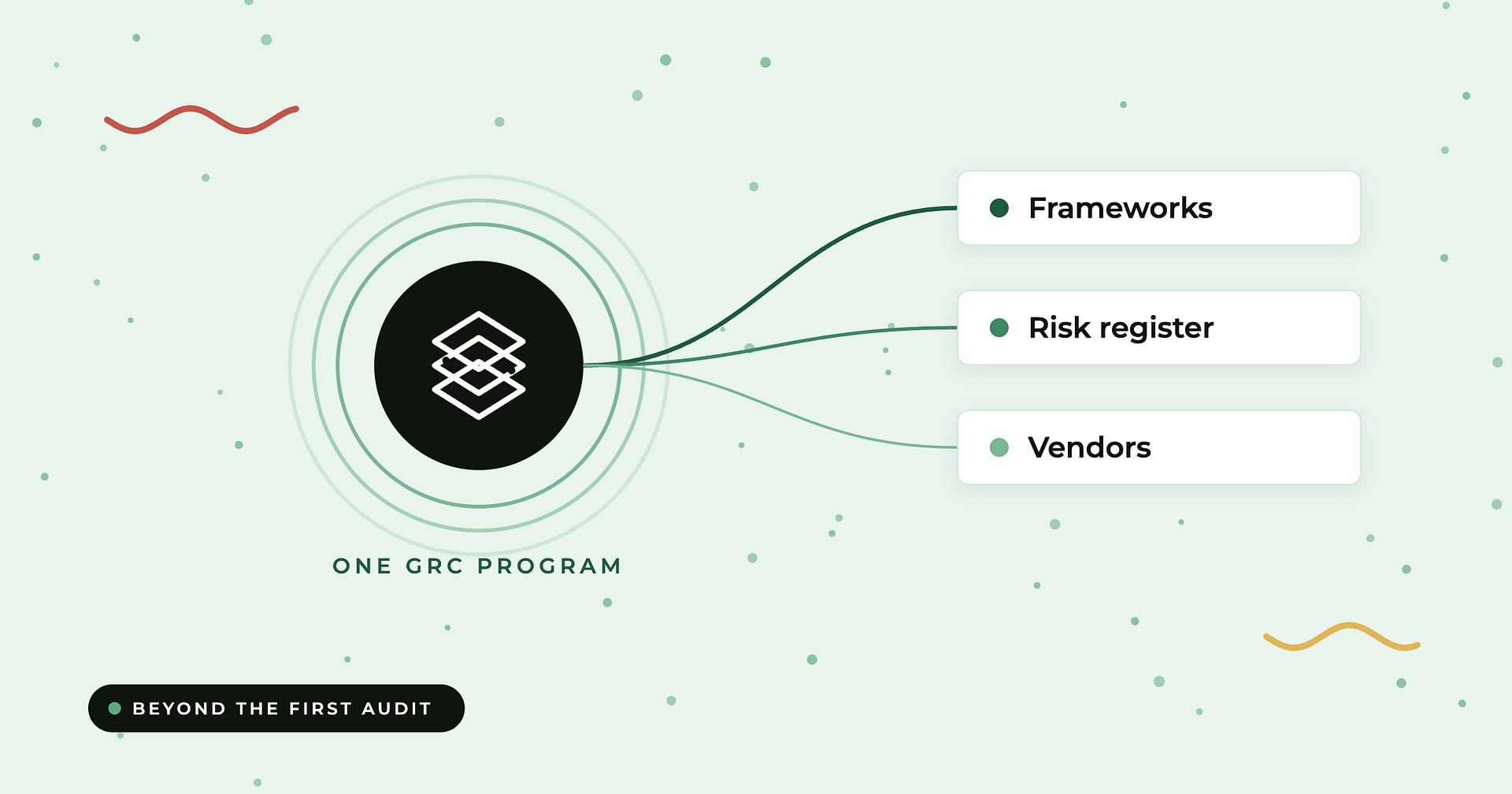
Enterprise risk management in banking works best when risks, controls, and business priorities are connected rather than managed in separate systems. Compyl gives banking and financial services teams a centralized way to score and quantify exposure, automate assessments, link risks to controls and vendors, and stay ready to report at any level of the organization.
Real-time scoring, heat maps, and financial exposure data help teams prioritize what matters most instead of reacting to issues after they grow. If your team is ready to move beyond manual tracking and disconnected tools, request a demo of Compyl’s risk management software today.