14 min read
Last updated: April 21, 2026
IT Risk Management Framework: The Definitive Guide for 2026
A practical guide to choosing, implementing, and operationalizing IT risk management frameworks â with comparison tables, quantification formulas, and step-by-step implementation workflows.
What Is an IT Risk Management Framework?
IT risk management frameworks differ from general enterprise risk management (ERM) by focusing specifically on technology-related threats: cyberattacks, data breaches, system failures, vendor compromise, and regulatory non-compliance. However, the most effective programs integrate IT risk into broader enterprise risk strategies rather than treating them in isolation.
The core risk management lifecycle follows a consistent pattern across all major frameworks, even though terminology varies. Every framework moves through some version of these phases: identification of assets and threats, analysis of likelihood and impact, evaluation against risk appetite, selection of treatment options, and ongoing monitoring of residual risk.
Why IT Risk Management Matters in 2026
The threat landscape has shifted dramatically in the past two years, making structured risk management essential rather than aspirational. Three converging trends are driving urgency.
Increase in cyberattacks reported in 2024, with a corresponding 40% rise in data breaches year-over-year. Organizations without formal risk frameworks are disproportionately affected. (Source: Check Point Research, 2024; IBM Cost of a Data Breach Report, 2024)
The regulatory environment is intensifying. With 69% of organizations reporting that regulations are too complex and numerous to manage effectively (Hyperproof 2024 IT Compliance Benchmark Report), ad-hoc approaches to risk are becoming untenable. Frameworks like NIST CSF 2.0, updated in 2024 with a new “Govern” function, reflect regulators’ expectation that risk management be embedded into organizational governance rather than siloed in IT.
Third-party risk has become the primary attack surface. Third-party data breaches increased 49% year-over-year between 2023 and 2024, and 74% of security professionals cite insufficient vendor security as their biggest concern (SecurityScorecard, 2024). A framework that doesn’t account for supply chain risk is incomplete.
AI introduces new, poorly understood risks. With a 31% increase in AI adoption for compliance functions between 2023 and 2024, organizations are deploying large language models and AI agents without established risk assessment methodologies. The NIST AI Risk Management Framework (AI RMF 2.0), released in February 2024, is the first formal attempt to address this gap.
Major Frameworks Compared: NIST RMF, ISO 27005, FAIR, and COSO
No single framework is universally best. The right choice depends on your organization’s regulatory environment, risk maturity, and whether you need qualitative governance or quantitative financial analysis. Here is how the four most widely adopted frameworks compare.
| Criteria | NIST RMF | ISO 27005:2022 | FAIR v3.0 | COSO ERM |
|---|---|---|---|---|
| Primary Focus | Federal IT security | Information security risk | Risk quantification ($) | Enterprise-wide governance |
| Approach | 7-step process | 5-step cycle | Quantitative analysis model | 5 components, 20 principles |
| Risk Measurement | Qualitative (Low/Med/High) | Qualitative or quantitative | Quantitative (dollar values) | Qualitative with strategy integration |
| Control Library | 1,000+ controls (SP 800-53) | References ISO 27001 Annex A | No controls (analysis only) | 20 integrated principles |
| Best For | Government, contractors, FISMA | ISO 27001 certification path | Board-level financial justification | Cross-functional enterprise risk |
| Complexity | High | Moderate | Moderate (quantitative skill required) | High (organization-wide) |
| Latest Version | SP 800-37 Rev. 2; SP 800-53 Rel. 5.2.0 | ISO 27005:2022 | FAIR v3.0 (January 2025) | COSO ERM 2017 |
| Cost to Adopt | Free (publicly available) | Paid standard (~$200) | Free (Open FAIR standard) | Paid framework + guidance |
NIST Risk Management Framework (RMF)
The NIST RMF is the most comprehensive framework for organizations that need structured, repeatable processes with a deep control library. Its seven steps â Prepare, Categorize, Select, Implement, Assess, Authorize, and Monitor â map directly to federal requirements under FISMA but are widely adopted in the private sector.
When to use it: You need compliance with NIST SP 800-53 controls, are a government contractor, or want the most prescriptive implementation guidance available.
ISO 27005:2022
ISO 27005 provides a five-step risk management cycle (Context Establishment, Risk Identification, Risk Analysis, Risk Evaluation, Risk Treatment) with two distinct approaches: event-based assessment that focuses on the broader threat landscape, and asset-based assessment that evaluates threats to specific information assets.
When to use it: You’re pursuing ISO 27001 certification and need a risk assessment methodology that integrates with the broader ISO 27000 family of standards.
FAIR v3.0 (Factor Analysis of Information Risk)
FAIR is the only internationally recognized standard for quantifying information risk in financial terms. Updated in January 2025, FAIR v3.0 uses the formula: Risk = Threat Event Frequency × Vulnerability × Loss Magnitude. It produces dollar-denominated risk estimates that boards and executives can use for investment decisions.
When to use it: You need to justify security investments in financial terms, compare risk reduction ROI across projects, or communicate risk to non-technical stakeholders.
COSO ERM
COSO ERM takes a top-down approach, integrating risk management with organizational strategy and performance. Its five components (Governance and Culture, Strategy and Objective Setting, Performance, Review and Revision, Information and Communication) span the entire enterprise rather than focusing on IT alone.
When to use it: You need enterprise-wide risk governance that connects IT risk to business strategy, financial risk, operational risk, and compliance. Commonly paired with NIST CSF for the IT-specific layer.
How to Choose the Right Framework
The decision depends on three factors: your regulatory requirements, your risk maturity level, and whether you need qualitative assessment or quantitative financial analysis.
| If Your Organization… | Start With | Consider Adding |
|---|---|---|
| Is a government contractor or federal agency | NIST RMF | FAIR for quantification |
| Needs ISO 27001 certification | ISO 27005 | NIST CSF for maturity benchmarking |
| Needs to justify security budgets to the board | FAIR | NIST CSF for operational controls |
| Manages risk across multiple business functions | COSO ERM | NIST RMF or ISO 27005 for IT specifics |
| Is a mid-market company starting from scratch | NIST CSF 2.0 | ISO 27005 or FAIR as you mature |
| Has multiple compliance requirements (SOC 2, HIPAA, PCI) | NIST CSF 2.0 with cross-mapping | GRC platform with control mapping |
Many mature organizations layer frameworks rather than choosing just one. A common approach is COSO ERM for enterprise governance, NIST CSF 2.0 for cybersecurity operations, and FAIR for quantifying risk when presenting to the board. The key is avoiding duplication by mapping controls across frameworks so a single control satisfies multiple requirements simultaneously.
5-Step Implementation Workflow
Regardless of which framework you choose, implementing IT risk management follows a consistent five-step workflow. This workflow synthesizes the common elements across NIST, ISO, and FAIR into a practical sequence.
Step 1: Establish Context and Scope
Define what’s in scope (business units, systems, data types), your organization’s risk appetite (the strategic level of risk you’re willing to accept), and your risk tolerance (the acceptable deviation from that appetite at the operational level). Document these in a formal risk appetite statement that your board approves.
Risk appetite and risk tolerance are frequently confused. Risk appetite is a strategic, board-level decision about how much risk the organization is willing to pursue in achieving its objectives. Risk tolerance is the operational, business-unit-level acceptable variation around that appetite. Think of risk appetite as the speed limit and risk tolerance as the range at which enforcement happens.
Step 2: Identify and Catalog Risks
Build a risk register by systematically identifying threats, vulnerabilities, and assets. Use a combination of asset-based identification (what systems hold sensitive data?) and threat-based identification (what attack vectors target our industry?). Include third-party risks â 49% of breaches now originate with vendors â and emerging risks from AI deployment.
Step 3: Analyze and Quantify
Assess each risk’s likelihood and potential impact. Start with qualitative ratings (Low/Medium/High/Critical) if you lack data for quantification, but plan to move toward quantitative analysis as you mature. See the Risk Quantification section below for formulas and methods.
Step 4: Treat and Prioritize
For each risk, select a treatment option based on a cost-benefit analysis:
- Remediate â Eliminate the root cause permanently (highest cost, highest risk reduction)
- Mitigate â Reduce likelihood or impact through compensating controls (moderate cost, partial reduction)
- Transfer â Shift financial exposure through insurance or contractual terms
- Accept â Consciously tolerate residual risk within your defined appetite
- Avoid â Eliminate the activity or asset that creates the risk entirely
The distinction between remediation and mitigation matters operationally. Remediation addresses root causes through permanent fixes â patching a vulnerability, replacing an insecure protocol, or decommissioning an unneeded system. Mitigation reduces consequences of a risk that still exists â adding monitoring, implementing compensating controls, or limiting blast radius. Most risk treatment plans combine both approaches.
Step 5: Monitor and Iterate
Risk management is continuous, not a one-time exercise. Establish key risk indicators (KRIs), define monitoring cadences, and integrate risk reviews into existing governance processes. See the Continuous Monitoring and KRI Development sections below.
Risk Quantification: Formulas and Methods
Moving from qualitative (“High risk”) to quantitative (“$2.3M annualized exposure”) assessments transforms risk management from a compliance exercise into a strategic decision-making tool. Here are three quantification approaches in order of complexity.
Basic Risk Scoring
The simplest quantitative approach multiplies likelihood by impact on numerical scales:
This produces scores from 1â25 that can be mapped to risk tiers: Critical (20â25), High (15â19), Medium (8â14), Low (1â7). While easy to implement, this approach is subjective and doesn’t produce dollar values.
Annualized Loss Expectancy (ALE)
ALE combines the probability of a risk event occurring in a given year with the estimated financial loss per event:
For example, if your organization estimates a 20% annual probability of a data breach (ARO = 0.2) with an average cost of $4.88 million per incident (the 2024 global average per IBM), the ALE is $976,000. This figure directly informs how much you should invest in controls to reduce that exposure.
FAIR Quantitative Model
FAIR provides the most sophisticated approach by decomposing risk into measurable factors:
Where LEF = Threat Event Frequency × Vulnerability
And Loss Magnitude = Primary Loss + Secondary Loss
FAIR uses Monte Carlo simulations to produce probability distributions rather than single-point estimates, giving decision-makers a range of outcomes (e.g., “there is a 90% probability that annualized losses from this risk will fall between $800,000 and $3.2 million”).
Developing Key Risk Indicators (KRIs)
Key risk indicators are quantifiable metrics that provide early warning when risk levels are approaching or exceeding tolerance thresholds. They differ from key performance indicators (KPIs) in their orientation: KPIs measure how well security controls are performing, while KRIs measure how much risk exposure is changing.
Effective KRIs share four characteristics: they are measurable with existing data, they lead rather than lag (warning before incidents, not after), they have defined thresholds tied to risk appetite, and they trigger specific escalation actions when breached.
Sample KRIs by Risk Domain
| Risk Domain | Key Risk Indicator | Green Threshold | Red Threshold |
|---|---|---|---|
| Vulnerability | Internet-facing assets with CVSS 9.0+ vulnerabilities | < 5 | > 20 |
| Access Control | Privileged accounts without MFA | 0 | > 3 |
| Third-Party | Vendors with overdue security assessments | < 5% | > 15% |
| Compliance | Days since last control evidence collection | < 30 days | > 90 days |
| Incident Response | Mean time to remediate critical findings (MTTR) | < 14 days | > 45 days |
| Data Protection | Sensitive data stores without encryption at rest | 0 | > 2 |
Start with 5â10 KRIs aligned to your organization’s top risks. Review thresholds quarterly and adjust as your risk landscape evolves. Each KRI should have a defined owner, monitoring frequency, and escalation path documented in your risk management plan.
Continuous Risk Monitoring
Annual risk assessments are no longer sufficient. With 51% of organizations reporting they struggle to identify where critical risks exist (Hyperproof, 2024), continuous monitoring closes the visibility gap between point-in-time assessments.
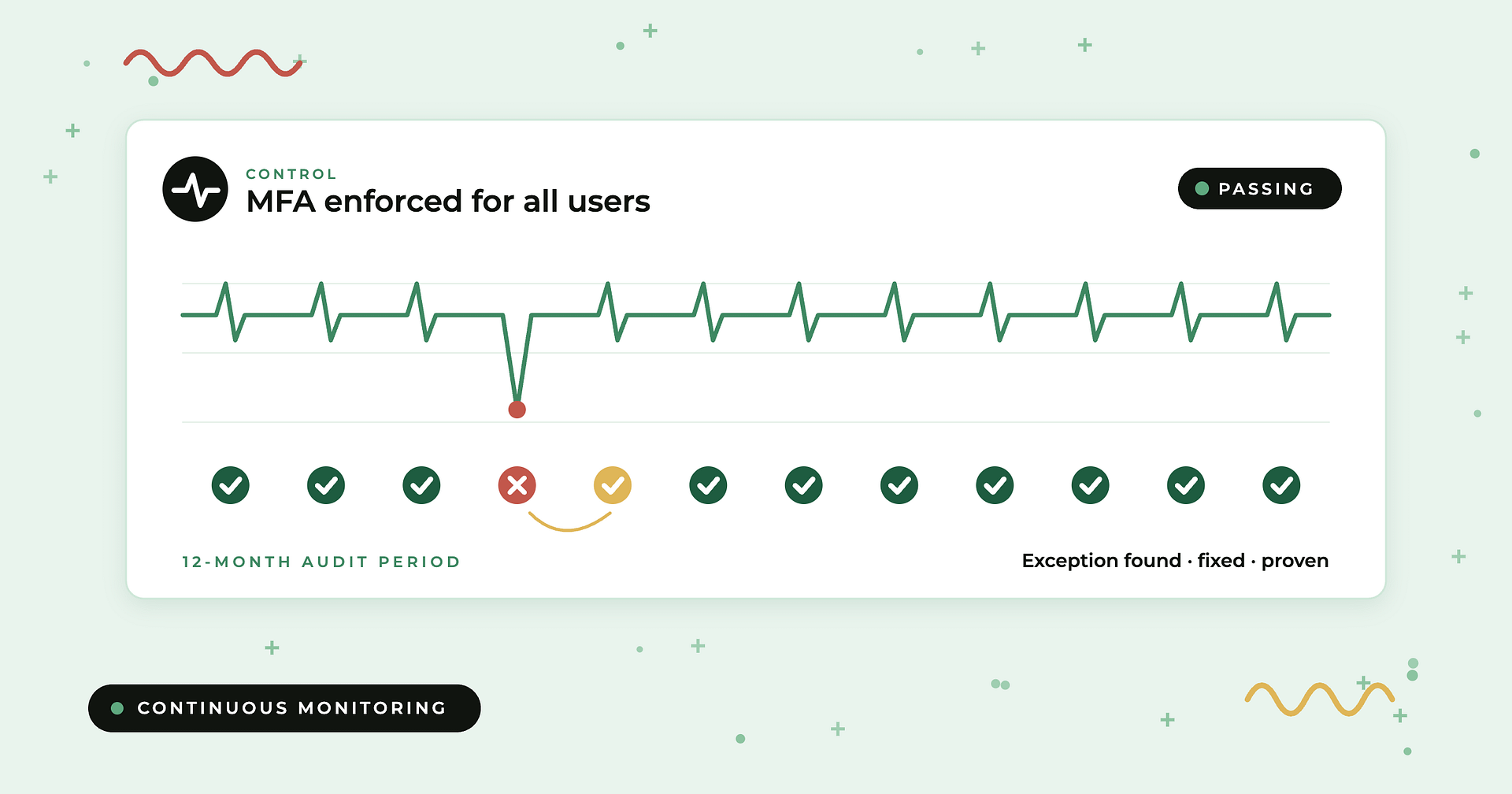
An effective continuous monitoring program integrates automated evidence collection from your security tools (SIEM, vulnerability scanners, identity providers, cloud platforms), maps collected data to specific controls and risks in your risk register, and triggers alerts when KRI thresholds are breached.
Monitoring Cadence by Risk Tier
| Risk Tier | Automated Monitoring | Human Review | Board Reporting |
|---|---|---|---|
| Critical | Real-time | Weekly | Monthly |
| High | Daily | Bi-weekly | Quarterly |
| Medium | Weekly | Monthly | Quarterly |
| Low | Monthly | Quarterly | Annually |
The most mature organizations use GRC platforms with 100+ integrations to automate evidence collection across their entire technology stack. This approach replaces spreadsheet-based tracking with live data feeds, reducing the labor burden of compliance while providing real-time risk visibility. Compyl’s Evidence Studio, for example, offers 500+ prebuilt evidence collection blueprints that map directly to framework controls, turning continuous monitoring from a manual burden into an automated process.
Integrating Third-Party and Vendor Risk
Year-over-year increase in third-party data breaches between 2023 and 2024. Yet only 4% of organizations have high confidence that their vendor questionnaires accurately reflect actual vendor risk. (Source: SecurityScorecard, 2024)
Third-party risk management (TPRM) can no longer exist as a standalone program. It must be integrated into your core risk management framework. This means vendor risks appear in the same risk register as internal risks, are assessed with the same quantification methods, and are monitored with the same KRI thresholds.
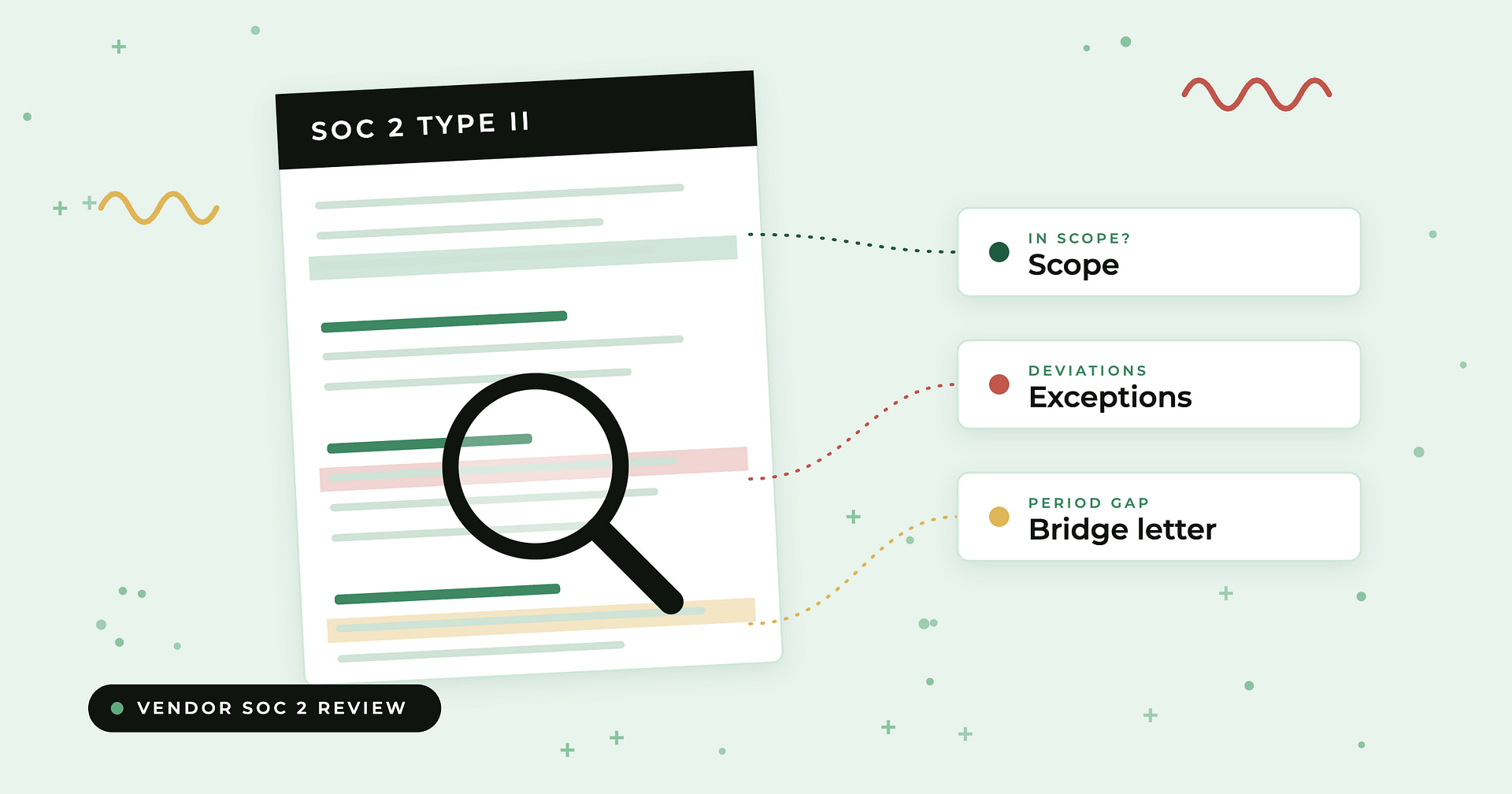
Practical integration requires three capabilities. First, continuous vendor monitoring that goes beyond annual questionnaires to include real-time security posture data. Second, risk quantification that applies the same ALE or FAIR models to vendor-originated risks. Third, contractual alignment so that vendor SLAs, incident notification requirements, and right-to-audit clauses are tied to your specific risk treatment plans.
Organizations assessing 100+ third parties annually (44% of large enterprises) need automated vendor risk workflows. This includes automated questionnaire distribution, response scoring, evidence collection, and risk rating â freeing your team to focus on the vendors that actually require human judgment rather than processing paperwork.
Managing AI and LLM Risks Within Your Framework
As organizations deploy AI agents and large language models, existing risk frameworks need to expand to cover threats that didn’t exist two years ago: model hallucinations producing incorrect compliance guidance, training data leaking sensitive information, prompt injection attacks, and AI-generated content creating regulatory exposure.
The NIST AI Risk Management Framework (AI RMF), updated to version 2.0 in February 2024, provides the most structured approach. It organizes AI risk governance into four functions: Governance and Oversight, Technical and Security Controls, Operational Process Controls, and Transparency and Accountability.
To integrate AI risk into your existing framework, treat AI systems like any other third-party or internal system: add them to your asset inventory, assess their specific threat vectors, quantify potential losses, and assign controls. The difference is that AI-specific KRIs need to measure things traditional KRIs don’t â model accuracy drift, data poisoning indicators, unauthorized training data exposure, and output validation failure rates.
This is an evolving area. Organizations using AI for compliance functions (31% and growing) should establish AI governance policies now, even if they’re lightweight. A minimal viable AI risk policy covers acceptable use cases, data handling requirements, human oversight thresholds, and incident response procedures for AI-related failures.
Frequently Asked Questions
What is the difference between risk appetite and risk tolerance?
Risk appetite is the strategic, board-level amount of risk an organization is willing to accept in pursuit of its objectives. Risk tolerance is the operational, business-unit-level acceptable deviation from that appetite. For example, a company might set a risk appetite of “moderate exposure to cybersecurity threats” and define risk tolerance as “no more than 5 critical vulnerabilities unpatched for more than 30 days.”
What is the difference between risk remediation and risk mitigation?
Risk remediation eliminates the root cause of a risk through permanent solutions, such as patching a vulnerability or decommissioning an insecure system. Risk mitigation reduces the likelihood or impact of a risk through compensating controls while the underlying vulnerability or threat still exists. Effective risk treatment plans typically combine both: immediate mitigation to reduce exposure while working toward full remediation.
Which IT risk management framework should I use?
The best framework depends on your regulatory environment and goals. Use NIST RMF for government or federal contractor requirements with its 1,000+ control library. Choose ISO 27005 if pursuing ISO 27001 certification. Select FAIR when you need to quantify risk in financial terms for board-level decisions. Adopt COSO ERM for enterprise-wide risk governance across business functions. Most mid-market organizations starting from scratch should begin with NIST CSF 2.0, which is free, flexible, and maps to most compliance requirements.
How do I calculate annualized loss expectancy (ALE)?
Annualized loss expectancy is calculated as ALE = ARO × SLE, where ARO (Annual Rate of Occurrence) is the estimated probability of the risk event occurring in a year and SLE (Single Loss Expectancy) is the estimated cost per incident. For example, a 20% annual probability of a data breach (ARO = 0.2) with a $4.88 million average cost (SLE) produces an ALE of $976,000. This figure helps determine how much to invest in risk reduction controls.
What are key risk indicators (KRIs) and how are they different from KPIs?
Key risk indicators (KRIs) are quantifiable metrics that provide early warning when risk levels approach or exceed tolerance thresholds. They differ from key performance indicators (KPIs) in orientation: KPIs measure how well security controls perform (e.g., “percentage of systems patched within SLA”), while KRIs measure how much risk exposure is changing (e.g., “number of internet-facing assets with CVSS 9.0+ vulnerabilities”). Effective KRIs are leading indicators that warn before incidents occur, not lagging indicators that report after the fact.
Automate Your Risk Management with Compyl
Compyl’s AI-guided GRC platform connects to 125+ tools, automates evidence collection with 500+ prebuilt blueprints, and maps controls across SOC 2, ISO 27001, HIPAA, NIST, and 10+ additional frameworks.
Last updated: April 21, 2026. This article is reviewed quarterly to reflect changes in frameworks, regulations, and threat landscape data.