Compliance controls are the policies, processes, and safeguards organizations use to meet regulatory requirements and internal standards. When implemented effectively, they help prevent violations, detect problems early, and correct issues before they escalate.
Key Takeaways
- Compliance controls are the operational mechanisms—such as policies, procedures, monitoring systems, and safeguards—that help organizations consistently meet regulatory and internal standards.
- Effective compliance programs rely on three types of controls: preventive controls to avoid violations, detective controls to identify issues, and corrective controls to fix problems and strengthen processes.
- Organizations use compliance controls to manage risk across areas like cybersecurity, vendor management, regulatory compliance (such as HIPAA or GDPR), and internal operational standards.

A recent article from Moody’s shows how unpredictable risk and compliance management have become. “Whether it’s the next fraud scam, a new kind of cyberattack, deepfakes we haven’t seen before, or a geopolitical event that catches everyone off guard, these are the challenges that can keep teams up at night.”
In a world where serious threats can appear out of nowhere, robust compliance controls are one of your most important lines of defense. Developing, implementing, and maintaining the right controls can be the difference between profitable growth and devastating losses.
What Are Compliance Controls?
Controls are the mechanisms necessary to achieve your organization’s objectives in areas like risk management, regulatory compliance, and cybersecurity. Compliance controls focus completely on adhering to required standards, including government regulations, industry best practices, and internal specifications.
Many types of controls are needed to achieve and maintain compliance:
- Policies and rules
- Processes
- Procedures and guidelines
- Metrics and monitoring
- Technology safeguards
- Actions and programs
Controls are one of the most important elements of a compliance program. Without a standardized framework to guide employees, managers, executives, and departments, it’s practically impossible for enterprises to implement compliant practices effectively.
Compliance Controls Illustrated
To understand compliance controls better, imagine a semi-truck carrying valuable freight. To reach the destination safely, the driver must comply with state and federal regulations for highway safety and transportation companies.
What controls ensure compliance? Here are just a few:
- A carefully planned and rigorously followed truck maintenance program
- Company guidelines for drivers, such as rest schedules
- Log books
- Truck sensors
- Brakes and tires in good condition
Whether you need to implement GRC, HIPAA, GDPR, or ISO 27001, compliance controls are never the program itself. They’re the moving parts that make sure your organization follows the framework correctly and consistently.
What Compliance Controls Does Your Organization Need?
Controls for compliance fall into three main categories: detective, preventative, and corrective. Each type plays a different role in becoming compliant and avoiding violations.
Preventive Compliance Controls
Preventive controls are similar to the owner’s manual of a vehicle. By establishing proven processes, it’s possible to avoid most problems — as long as the owner follows through.
A compliance program with preventative controls can identify likely risks and develop defensive measures to avoid them. This is your first line of defense against noncompliance, coming into play before issues appear.
Risk-informed policies and procedures are common types of preventative controls. Employee training programs and robust data security tools can also prevent violations. You should also have a system of checks and balances to protect against insider threats.
Detective Controls for Compliance
Detective compliance controls help you detect violations that have already happened or ongoing issues with noncompliance. They’re like a car’s “check engine” light. By paying attention to warning signs, it’s possible to minimize the negative consequences.
Common detective controls include analytics tools, documentation, and audits. It’s vital to establish roles, define responsibilities, and make sure that qualified professionals manage your compliance program.
Corrective Controls
As the name suggests, corrective controls help you fix issues and implement long-term solutions. Returning to the automotive example, corrective measures would mean visiting a qualified mechanic, replacing defective parts, and being more careful to perform periodic engine maintenance.
Corrective controls often include organizational, technological, and administrative actions. In the case of a data breach, your organization needs to follow a documented incident response plan, analyze what went wrong, and patch vulnerabilities so it doesn’t happen again, such as limiting who has access to sensitive data.
Are Compliance Controls Necessary for Your Industry?
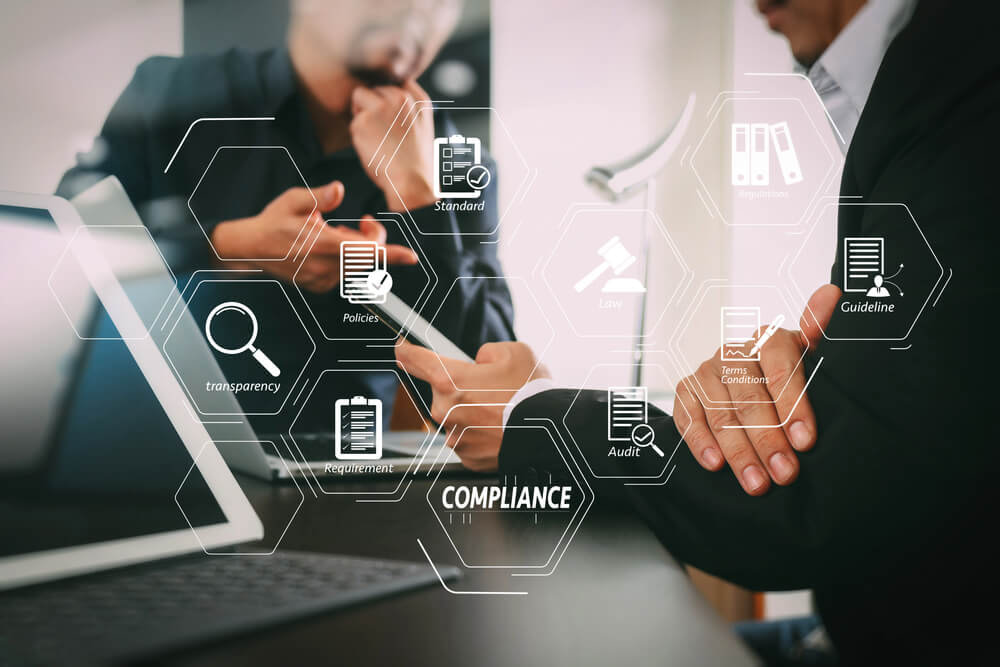
Compliance matters whether you have to worry about government regulations or not. Controls ensure your customers receive high-quality products that meet the agreed-upon specs. A compliance program makes your data safer and protects your company from costly disruptions.
Virtually every part of enterprise operations depends on compliance with internal standards in some way, from achieving objectives to making processes more efficient. GRC compliance controls are even more critical for organizations in highly regulated industries, such as finance and Fintech.
Healthcare organizations need to maintain HIPAA compliance 365 days a year. SaaS companies often juggle PCI DSS, SOC 2, and ISO 27001. Each of these frameworks sets broad standards, but it’s up to your organization to develop the controls needed to meet them.
How Can You Use Compliance Controls?
Enterprise-level organizations have complex operations and many thousands of employees, sometimes distributed around the globe. Continuously meeting customer expectations, industry best practices, and governmental regulations in an evolving global economy is challenging to say the least. Well-designed compliance controls provide stability and measurable objectives for the entire organization.
HIPAA Compliance
Hospitals, health insurers, and other covered entities use compliance controls to avoid costly HIPAA violations. Some controls are directly required by the HIPAA framework’s Privacy, Security, and Breach Notification Rules, including data encryption technology and network logs.
Preventative HIPAA controls help you identify what type of protected health information your organization processes, how, and where. Risk assessments help you prepare effective safeguards, such as firewalls and multifactor authentication. Device policies and training programs protect PHI by reducing the risk of unauthorized access.
Internal Compliance Management
It’s always better to detect compliance failures internally instead of discovering serious flaws after a public incident. Compliance verification controls and audits can reveal smaller patterns of noncompliance in time for your company to implement corrective measures.
For example, AI-powered compliance software can reveal issues in specific departments. This allows you to develop tailored solutions that address the underlying problem, not symptoms. Compliance controls also let you monitor how well those departments are implementing the required corrective actions. If there are bottlenecks, your organization can eliminate them.
Vendor Risk Management
The usefulness of controls extends to third-party compliance. Every organization should have a standardized framework for vendor interactions, such as:
- Vendor risk assessment process
- Criteria for selecting approved vendors
- Roles and responsibilities for vendor onboarding
- Third-party audits and reporting
- Vendor re-assessment
- Secure offboarding
Third-party compliance failures affect your own compliance, so you must take a proactive approach to vendor security. Regular audits and network scanning are a must for critical services. These controls shine a light on vendor practices, minimizing the risk of third-party data breaches or operational collapses catching you off guard.
GDPR Compliance
GDPR Article 5 requires companies to implement “appropriate technical and organizational measures” for data protection and privacy. GDPR compliance controls include data protection impact assessments, privacy policies, and secure processes for data minimization, data transfers, records deletion requests, and access control.
Compliance Certification
Cybersecurity compliance is increasingly important for service providers in every industry, from payment gateways to financial consulting firms. Controls help you follow data security best practices, including physical security, technology safeguards, and risk management programs.
Clients want proof, not promises. Cybersecurity certifications like ISO 27001 and HITRUST CSF are immensely valuable. They’re also challenging.
Compliance controls give you clear targets and help you track progress as an organization. Not only does this save you money on third-party validation assessments, but it also reduces the time needed for achieving compliance.
Why Use Compyl To Manage Compliance Controls?

Between preventive, detective, and corrective controls, many organizations have to manage thousands of policies and processes. Making sense of the data becomes more difficult as enterprises scale. For many companies, AI-powered compliance management tools are the only realistic way to stay compliant.
Compyl can help your organization track compliance in real time. Machine-learning technology helps you identify which control points are critical to success. Improve your return on investment by following results-driven initiatives instead of trial and error.
By enabling internal teams to reuse controls and map them to different frameworks, Compyl streamlines compliance across your organization. Test once and satisfy many requirements.
Develop effective compliance controls that align with your company’s objectives. Discover the benefits of a state-of-the-art AI compliance solution by requesting a demo of Compyl today.